


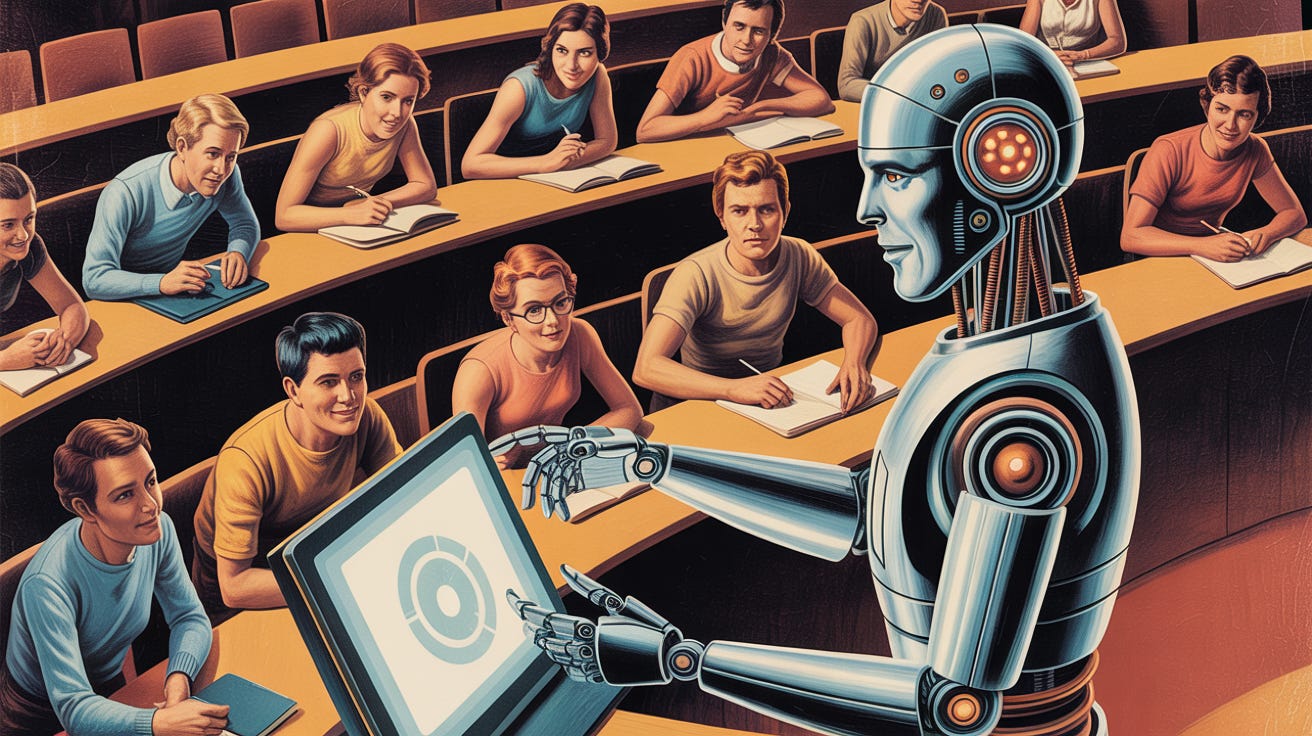
Not next year. Not after another committee. Teachers need to understand and be able to teach AI, now.
If that sounds dramatic, read the room: nine out of ten students are already using AI to study. That is the quiet revolution happening under the noses of the academy. A Belgian survey asked 1,067 students and 302 instructors and found near universal student adoption. Almost four in ten instructors say they have already confronted "AI fraud."
Nearly two thirds of instructors are making up their own rules while 60 percent are asking for a clear policy. Students are demanding clarity as well. Most still print materials and spend serious money on paper, which tells you how chaotic the digital transition remains. But one can briefly summarize the current AI evolution in education as follows: students adapted quickly. Institutions did not.
Similar numbers are found all around the planet. Microsoft’s 2025 education report says AI adoption in education is widespread and documents a steep rise in daily and weekly use among students and educators. It also flags a literacy gap. Less than half of both groups say they know a lot about AI. In other words: the education system is full of people using AI tools they barely understand, under the supervision of people who know next to nothing at all.
The luddite educators' class struggle against their new AI overlords is doomed from the beginning, though, as even the basic online learning infrastructure they routinely use is now embracing generative and predictive AI:
“Many faculty don’t even realize they’re interacting with AI-powered tools.”
"While only 15 percent of faculty respondents said their college or university mandates the use of AI, 81 percent said they are required to use education technology systems, such as the learning management platforms Canvas and Google Suite. But AI-powered predictive analytics are now embedded in both of those systems—even when users turn off AI features. In response, the AAUP report suggests that colleges and universities should offer “better and more critically informed, holistic professional development around AI, including what it is and is not and how it has been incorporated already.”
Read that again. Teachers are unknowingly using tools that they, in their petty ignorance, attempt to prevent their students from using.
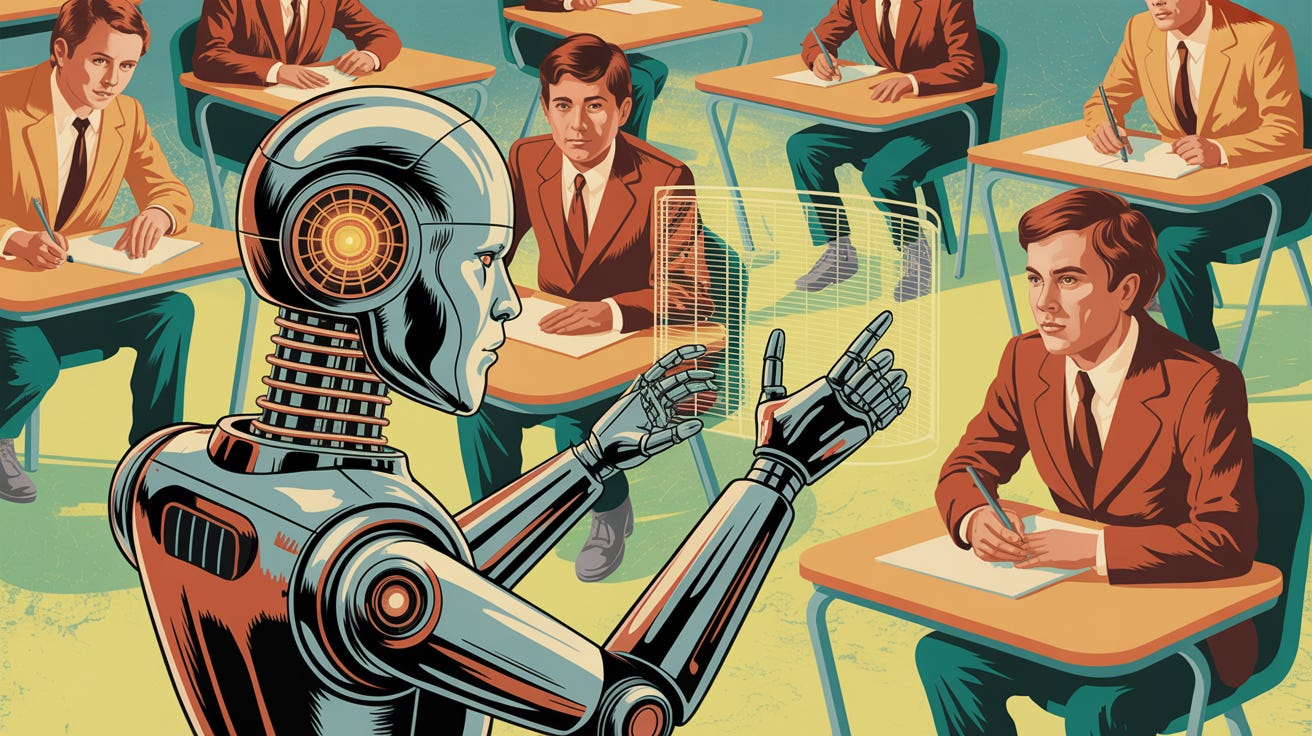
So what should teachers do? First, accept reality. Every teacher is now an AI teacher. Second, move from prohibition theater to transparent expectations. Students themselves want clear rules. Your job is to define legitimate use, design assessments that require original thinking, and teach verification. The classroom must become a place where AI is interrogated, cited, constrained and improved, not a place where it is banished and then used, badly, in the shadows.
Third, build your own competence. If less than half of educators feel confident with AI, it's high time to fix that fast. You cannot teach what you do not practice. Make your first course policy a living document. Show students how you used AI to draft it. Show them where you did not. Require process evidence like drafts, voice notes, notebooks and code histories. Find ways to grade effort, thinking and results instead of autistically screeching about generative AI performing the grammar checks.
The uncomfortable truth in the data above is not that students are using AI. It is that they are outpacing the institutions meant to guide them. That flips the power dynamic. The real question is no longer what schools will allow students to do with AI. The real question is what students will decide to do with schools that cannot keep up.
Explore more from Popular AI:
Start here | Local AI | Fixes & guides | Builds & gear | Popular AI podcast