


If your AI requires an internet connection to think, you do not own your mind. You are renting a slice of a central brain that can be lobotomized, monitored, or revoked at the whim of a corporate safety committee. The only path to true autonomy is “compute sovereignty”: the ability to run state-of-the-art intelligence on hardware you physically own.
The future of local AI looks bright
In early February 2026, IBM Research and several hardware startups announced a breakthrough in 3D Analog In-Memory Computing (3D-AIMC). Unlike traditional NVIDIA GPUs that waste 90% of their energy moving data between memory and the processor, these analog chips perform the math exactly where the data is stored. This allows models with billions of parameters to run at nearly 80 “Tera Operations Per Second per Watt” (TOPS/W), a massive jump in efficiency over current digital standards.
The changing physics of AI
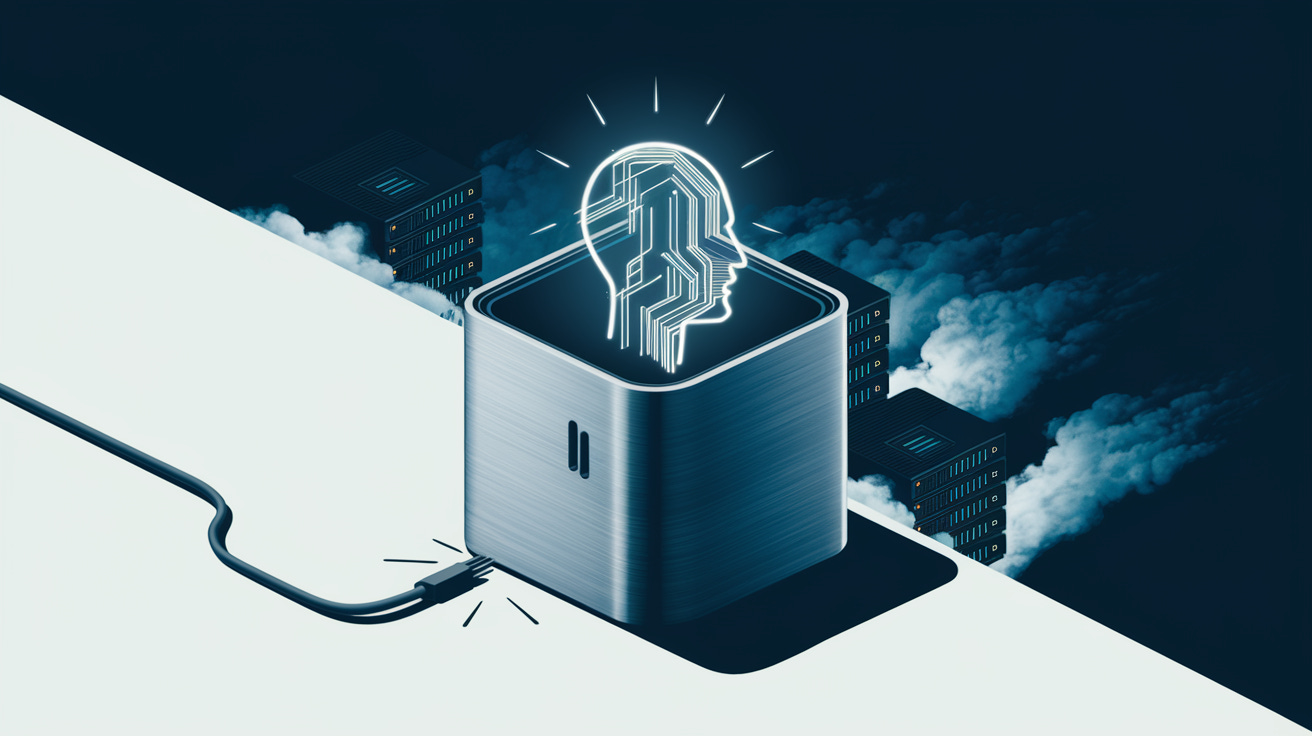
The “Cloud Monopoly” is built on the fact that frontier AI models are too heavy for your laptop. This forces you to use “AI-as-a-Service” from companies like Google or OpenAI. The move to analog AI changes the physics of the industry. It means that the next generation of “frontier” models (those capable of complex reasoning and agentic planning like Claude Opus 4.6) could soon run on a home server the size of a toaster, drawing no more power than a lightbulb.

Why AI must and will be decentralized
The centralizing forces of the industry are terrified of the “Edge.” If intelligence becomes decentralized, they lose their primary control lever: the data center. Centralized servers allow for mandatory takedowns and the implementation of “safety filters” that cannot be bypassed.
By contrast, an analog chip in your home is your private property. It has no “kill switch” and no “content moderation team.” The incentive for the establishment is to frame these independent hardware movements as “unregulated” and “dangerous,” potentially leading to future bans on high-performance local silicon under the guise of “national security” or “misinformation prevention.”
Hardware is the final frontier of free speech and thought in the digital world. To protect your autonomy, move your data and your “thinking” off the cloud and onto your own silicon.
Explore more from Popular AI:
Start here | Local AI | Fixes & guides | Builds & gear | Popular AI podcast