


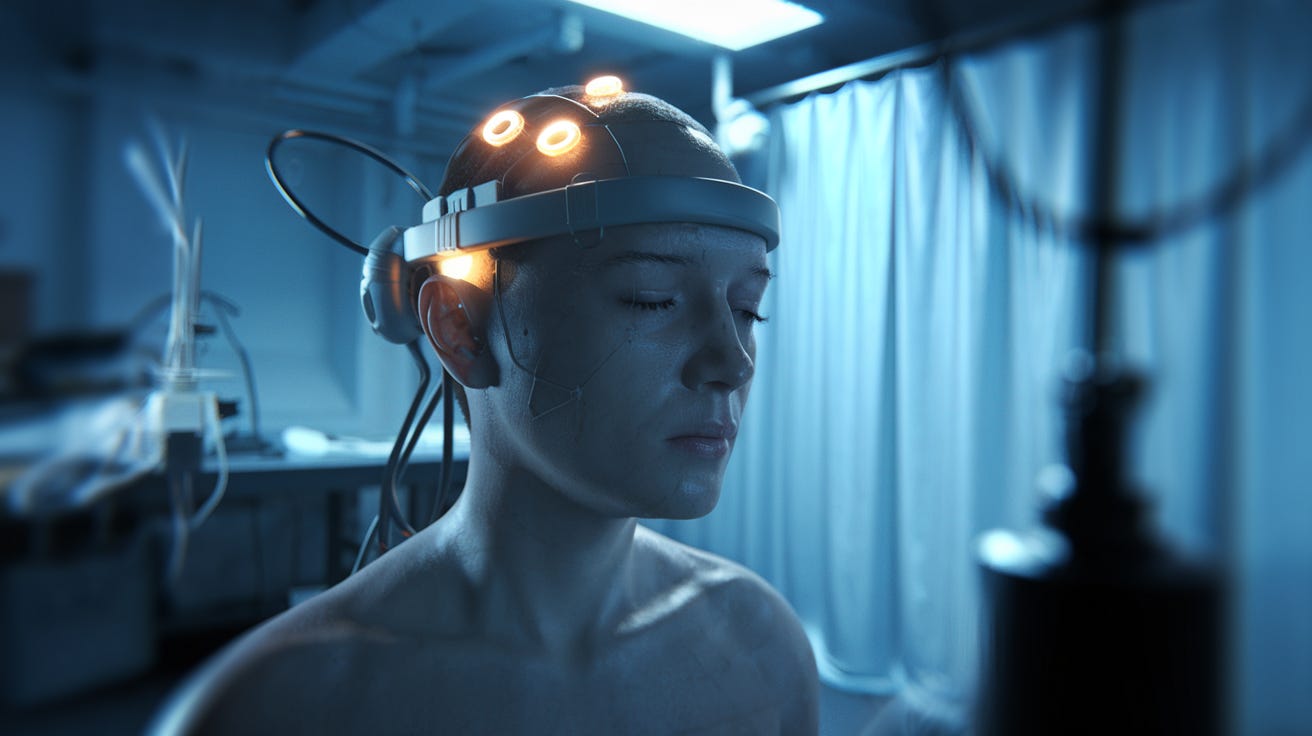
ZUNA is being talked about like a “thought-to-text” breakthrough. That framing grabs attention, but it also blurs the real story.
What Zyphra announced in its release post, and what the GitHub repository, Hugging Face model card, PyPI package, and arXiv paper actually show, is something more grounded. ZUNA is an open EEG foundation model built to denoise recordings, reconstruct missing channels, and infer signals at new electrode positions. That may sound less cinematic than mind reading, but it is far more credible, and arguably more important.
For Popular AI readers, that is the angle worth focusing on. ZUNA looks like a practical infrastructure layer for brain-computer interfaces. It improves the quality of messy EEG data, which is one of the biggest reasons real-world BCI systems still feel fragile outside controlled lab conditions.
What ZUNA actually is
ZUNA is a 380 million parameter EEG model. In both Zyphra’s own materials and the model card, it is described as a masked diffusion autoencoder trained to reconstruct, denoise, and upsample scalp EEG across arbitrary channel layouts. In plain English, you can think of it as a cleanup and reconstruction engine for imperfect brainwave recordings.
That matters because EEG in the wild is messy. Electrodes slip. Channels fail. Consumer hardware has limited sensor counts. Even in research settings, preprocessing can be tedious and error-prone. ZUNA is aimed squarely at that problem. Instead of asking a model to leap straight from neural noise to language, it tries to make the underlying signal more usable first.
According to the paper abstract, the model was trained on an aggregated corpus spanning 208 public datasets and roughly 2 million channel-hours. The same abstract says the architecture uses a 4D rotary positional encoding over spatial coordinates and time so it can generalize across different electrode positions and channel subsets. That is a strong sign that Zyphra is trying to build a reusable pretrained backbone for EEG, not a one-off demo tuned to a single setup.
Why people are calling it thought-to-text
The source of the confusion is easy to spot. Zyphra’s release frames ZUNA as part of a longer path toward thought-to-text, and the post explicitly says the company sees models like this as groundwork for future systems that could decode brain states and eventually support that modality. That language is real. It is also aspirational.
What shipped on February 18, 2026 was not a product that turns your private thoughts into readable sentences. Zyphra published the release post, the open repository, the Hugging Face weights, and the initial PyPI release. PyPI now shows versions 0.1.0 from February 18, 2026 and 0.1.1 from February 26, 2026, which suggests the package is already being updated in public.
The important distinction is simple. ZUNA works on EEG reconstruction. It does not output free-form language from brain activity today. The article draft got that right, and it is worth preserving because this is exactly where hype runs ahead of reality.
What real noninvasive decoding looks like today
If you want a benchmark for actual thought-to-language work, the better comparison is not EEG at all. It is the fMRI semantic decoding line of research.
The PubMed-indexed paper on semantic reconstruction of continuous language from non-invasive brain recordings drew so much attention because it showed a system reconstructing meaning from brain activity in a much more direct way. The UT Austin explainer makes the tradeoff clear for a broader audience. The system required extensive subject cooperation and training data, and it was built around fMRI, not a cheap EEG headset. Even the alternate PubMed record linked in the draft points back to that same line of work.
That distinction matters because EEG and fMRI are very different tools. EEG is excellent at temporal resolution. It captures fast changes well. But a long-running body of research on EEG and fMRI integration underscores the flip side: EEG is much weaker when it comes to fine-grained spatial localization, especially for deeper sources. That is one reason “decode my thoughts from a lightweight headset” remains much closer to science fiction than product reality.
Why the boring part may be the breakthrough
This is where ZUNA gets interesting.
The glamour version of BCI is direct mind reading. The useful version is better tools for preprocessing, repair, and signal reconstruction. That is where a lot of practical progress actually happens. If you can make sparse or noisy EEG data more reliable, you improve the whole downstream stack, from research workflows to assistive communication tools to real-world experimentation with lower-cost hardware.
Zyphra’s paper abstract says ZUNA improves over spherical spline interpolation, which is the common baseline many researchers already know from MNE. The GitHub repo makes the same comparison more concretely, stating that ZUNA outperforms MNE’s default spherical spline interpolation across unseen datasets and that the gap becomes larger at higher upsampling ratios. Those are ambitious claims, but they are also the kind of claims an open release lets other people test.
That is the bigger story for AI readers. Open models do not just create buzz. They move capability outward. They let researchers, hackers, startups, and clinicians inspect what is being built instead of relying on a sealed API and a marketing page.
What readers can do with ZUNA right now
The good news is that Zyphra did not stop at a paper. The company shipped a usable path for experimentation.
The GitHub quick start points readers to tutorials/run_zuna_pipeline.py, and the documented workflow has four steps: preprocess .fif files into .pt, run inference, convert the output back to .fif, and generate comparison plots. The repo also says the model weights are automatically downloaded from Hugging Face on first run.
That makes ZUNA look less like a teaser and more like an actual toolchain component. It is also designed to fit into the ecosystem EEG practitioners already use. The draft correctly flagged MNE as the natural reference point, and the official MNE site plus The typical M/EEG workflow remain the clearest starting points for people who want to understand how ZUNA slots into an existing Python-based pipeline.
There is also a licensing point worth underlining. The Hugging Face model card lists the model under Apache-2.0, and the PyPI metadata shows the same license expression. For anyone building products or research tools, that is a meaningful signal. It means this is not just viewable. It is buildable.
The part people should worry about
The article’s sharpest point is also the one most AI coverage tends to soften. Brain data raises a different class of questions than most software.
Even if ZUNA is “just” a preprocessing model, EEG can still reveal sensitive information about health, fatigue, cognitive state, and other private traits. Once better signal reconstruction becomes cheap and portable, the pressure to operationalize that data will not arrive as a dramatic mind-reading announcement. It will arrive through dashboards, scoring systems, compliance layers, and incentives dressed up as safety or productivity.
That concern is not disproved by the fact that ZUNA is open. In one sense, openness is a protection because it reduces dependency on a single gatekeeper. In another sense, it speeds up the ecosystem around the underlying capability. Both things can be true at once.
ZUNA is not a magical thought-to-text machine. It is a serious open EEG model that makes noisy brainwave data more usable. That sounds modest. It is not. Better infrastructure often matters more than louder demos, because infrastructure is what makes the next generation of products, labs, and policies possible.
What the takeaway should be
The cleanest way to understand ZUNA is this: it is a real breakthrough in EEG reconstruction, not a present-tense breakthrough in reading your inner monologue. The hype is ahead of the product, but the product is still important.
If the field keeps moving in this direction, the most valuable habit readers can build now is skepticism with technical literacy. Read the paper. Inspect the repo. Check the license. Keep the data local when you can. Treat EEG as sensitive biometric material even when companies call it harmless preprocessing. Start with the official zuna PyPI page, not random mirrors, and remember that even a simple EEG primer diagram on ResearchGate is enough to remind you how much fragile hardware and signal cleanup sit underneath the mythology of “reading thoughts.”
That is the fork in the road. Open brain models can help people communicate, experiment, and build useful tools outside closed corporate systems. They can also normalize a new layer of surveillance if nobody sets the boundaries early. ZUNA does not settle that question. It just makes it more urgent.
Explore more from Popular AI:
Start here | Local AI | Fixes & guides | Builds & gear | Popular AI podcast