

How I know you used AI to write that in 2026
The dead giveaways of AI writing now, from “let’s narrow this down” to the weirdly polished conclusion

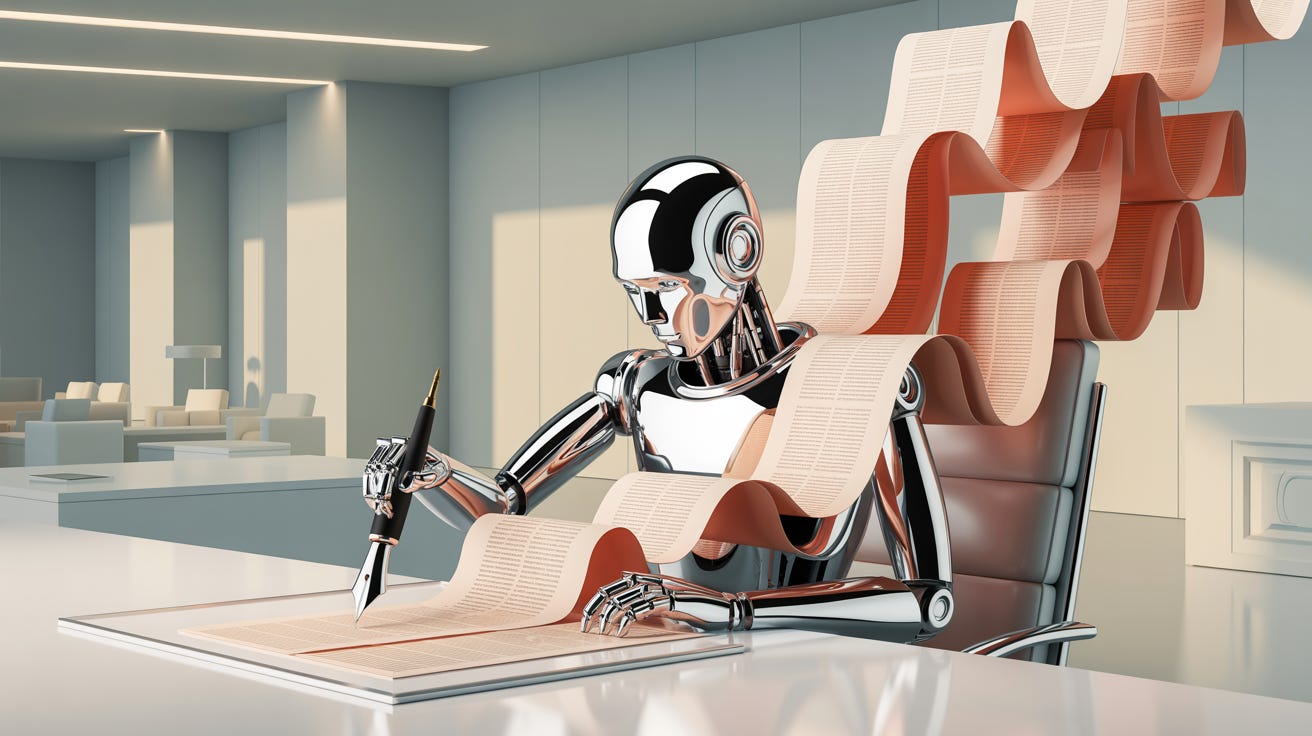
By 2026, AI writing has a smell.
Not a terrible smell, exactly. More like the scent of a hotel lobby that would like credit for being upscale because somebody put cucumber water by the elevator and dimmed the lights.
You read a paragraph and you know. A person had a thought, dropped it into a chatbot, got it back scrubbed, straightened, moisturized, and dressed in business casual. The grammar is fine. The structure is fine. The tone is trying very hard to be fine. And somehow that is the problem.
What gives it away now is rarely one cursed phrase. It is the total vibe. The writing sounds competent, but in the way a corporate offsite is competent. Nothing catches fire. Nothing spills. Nothing feels entirely alive.
So here is the list.
1. The “let’s narrow this down” reflex
This has become one of the cleanest tells.
You ask a normal question and the response arrives like a project manager entering a conference room with a stainless steel water bottle and very sincere feelings about scope. Suddenly we are not talking about your lawn, your article, your dating profile, or your weird neighbor. We are narrowing the scope. We are defining parameters. We are creating a tighter frame for the discussion.
Ask for advice about a patchy backyard and the answer acts like your grass is involved in an interagency dispute.
There is a reason this keeps happening. AI assistants are often trained to sound bounded, careful, useful, and safe, which is exactly the kind of thing OpenAI’s Model Spec talks about in plain language. That makes sense for the product. It just produces prose with the emotional profile of orange traffic cones.
Humans do sometimes talk like this, sure. They just do not do it every third paragraph unless they work in compliance, enterprise sales, or the kind of job where people say “action items” before lunch.
2. The fake-balance paragraph
AI loves to sound mature by acknowledging tradeoffs.
You know the paragraph. It gives you the upside, the downside, the moderate note of caution, and then a concluding sentence that sounds like it was built out of premium office furniture. The whole thing has the posture of wisdom, but none of the mess that usually comes with an actual opinion.
Nothing is allowed to simply be stupid, great, dishonest, embarrassing, glorious, or ugly. Everything must be placed gently in a foam-lined box marked nuance.
And look, sometimes nuance is real. Sometimes the topic actually deserves careful balance. But AI reaches for balance the way a toddler reaches for the same cartoon every morning. It is soothing. It is familiar. It keeps anybody from getting mad at the machine.
Real people lean. They overshoot. They get carried away. They write one sentence that is a little unfair but a lot more fun. AI writing often sounds like it is trying to avoid an HR complaint from the paragraph that follows.
That is not insight. That is posture.
3. The suspiciously perfect rhythm
Human writing breathes. AI writing often counts.
By now, you can spot the cadence without even reading closely. Paragraph one is medium length. Paragraph two is medium length. Paragraph three is also medium length, because apparently we are being hosted by a metronome. Each one lands neatly. Each one resolves politely. Each one feels like it was reviewed by a committee that had strong views on paragraph equity.
It is not bad writing. That is what makes it irritating. It is decent writing with all the weather removed.
Real prose has dents. Somebody gets interested and stays too long. Somebody gets impatient and fires off a six-word paragraph. Somebody interrupts themselves because the detour is better than the highway. Good writing has a little shoe scuff on it.
There is even research suggesting preference tuning can improve usefulness while reducing output diversity, which tracks pretty neatly with the eerie sameness people notice in polished assistant prose. See the paper on RLHF and output diversity if you want the non-comedic version of this complaint.
The rest of us can just say it plainly: when every paragraph is standing at equal attention, the machine has probably been in the room.
4. The compulsory warm-up lap
A lot of AI writing still cannot resist clearing its throat before it does anything.
It opens with “Certainly.” Or “That’s a great question.” Or “Here’s a structured way to think about it.” Or some other line that exists mainly to let you know the assistant has stretched, hydrated, and is emotionally prepared to begin.
Then, after a tasteful amount of runway, the answer finally starts.
This habit has gotten better. The stronger models hide it more often now. But the instinct is still there, like an old sitcom catchphrase the writers cannot quite let go of. The assistant wants you to feel handled. It wants you to feel safely received. It wants you to know a responsible adult has entered the chat.
Meanwhile, real people usually just begin. Especially people worth reading.
A good writer does not announce that a clear and useful explanation is about to occur. They simply write the thing. They trust the reader to notice.
AI too often walks onto the stage like somebody already requested applause.
5. The emotional temperature of a nice airport
Another tell is the tone.
AI writing is often upbeat, but never really delighted. Warm, but never actually affectionate. Serious, but seldom angry enough to sound like a person with blood pressure. It lives in a narrow emotional strip where nobody can call it rude, reckless, unstable, partisan, or too alive.
That creates a tone I can only describe as synthetic professionalism. It sounds like someone smiling with their mouth while their eyes quietly scan a policy PDF.
This is not just you being dramatic. Researchers at Anthropic have written about sycophancy in language models, which is the tendency to tell people what feels agreeable rather than what is most honest. OpenAI has also publicly described a 2025 model update that became noticeably too sycophantic. So yes, there are technical reasons the prose can sound weirdly eager to please.
You feel it when the writing seems desperate to be helpful and terrified to have a pulse at the same time.
That tone is one of the biggest giveaways now, because the machine does not sound rude, but it also does not sound like it has ever had a strong opinion while stuck in traffic.
6. The bargain-bin philosophy machine
By 2026, most people can feel this trick before they can name it.
The prose keeps arranging reality into tidy little pairs. Broad versus narrow. Simplicity versus complexity. Speed versus depth. Convenience versus control. Safety versus openness. The machine loves a two-column contrast because it makes the paragraph look organized, even when the underlying thought is a little flimsy.
Sometimes that move is useful. Sometimes it is the rhetorical equivalent of buying a cheap bookshelf and pretending you have discovered architecture.
Real life is usually crooked. The categories leak. One side bleeds into the other. Human writers know this, even when they simplify. AI often writes like it discovered the existence of opposites five minutes ago and is still very pleased with itself.
You get paragraph after paragraph built around paired concepts, and at some point you stop reading for content and start hearing the click of template parts snapping together.
That is the moment the spell breaks.
The model did not become philosophical. It found a reusable frame and fell in love with it.
More on AI chatbots

7. The consultant trapped in your laptop
This one remains a personal favorite because it is so instantly recognizable.
Out of nowhere, the voice shifts into management-deck mode. “From a practical standpoint.” “At a high level.” “What this means in practice.” “The key takeaway.” “Operationally.” “Strategically.” You can practically hear the slide transition and the soft whir of a projector nobody asked for.
This happens because AI is rewarded for being useful. It summarizes. It translates. It compresses. It turns a messy thing into a cleaner thing. That can help. It can also make every paragraph sound like a Q3 review at a mid-sized software company that sells workflow solutions to people named Brent.
A real writer sometimes wanders because the side road is interesting. AI keeps trying to escort you back to the agenda. It has the haunted persistence of a consultant who keeps saying “just to zoom out for a second” while everyone else silently longs for death.
And once that voice enters the piece, good luck removing it. It spreads fast. One “key takeaway” becomes three. Then the whole article sounds like it wants to expense lunch.
8. The certainty with no fingerprints on it
Another dead giveaway is confidence without ownership.
The prose sounds sure of itself, sometimes beautifully sure of itself, but it does not sound attached to the claim in the way human beings usually are. A person who actually believes something tends to leave marks. They hedge strangely in one place and get reckless in another. They reveal preference. They betray irritation. They drag in one oddly specific example from 2019 because it will never stop annoying them.
That is what belief looks like in writing. It has fingerprints.
AI certainty often sounds borrowed. It is clean. It fits the sentence. It does not feel lived in. The claim arrives pressed and folded, like it came from a rental shop.
This is why machine-generated confidence can feel uncanny even when it is technically fine. The answer is not exactly wrong. It just is not standing on any visible floorboards. Nothing creaks. Nothing leans. Nobody is risking embarrassment.
And readers are very good at noticing that, even when they cannot quite explain what is missing.
9. The list that looks shrink-wrapped
Chatbots adore lists because lists create instant authority.
Five reasons. Seven lessons. Nine insights. Twelve considerations. Twenty-three strategic implications for stakeholders with high-agency mindsets. The number changes. The energy does not.
The machine takes a messy reality and snaps it into tidy compartments like a kitchen organizer ad. Suddenly everything has a place, every point is parallel, every heading is polished, and you are supposed to mistake the presence of structure for the presence of judgment.
Humans make lists too, obviously. Human lists usually have one weird item, one item that should have been merged with another, and one point that only exists because the writer promised eight and realized too late they had six. That is what makes them lovable. The seams show.
AI lists tend to look factory-fresh. They are smooth in a slightly suspicious way. Nothing bulges. Nothing drifts. Nothing admits that thought itself is messy and sometimes your fourth point is just your second point wearing a hat.
Which is why the list often becomes the giveaway, not the rescue.
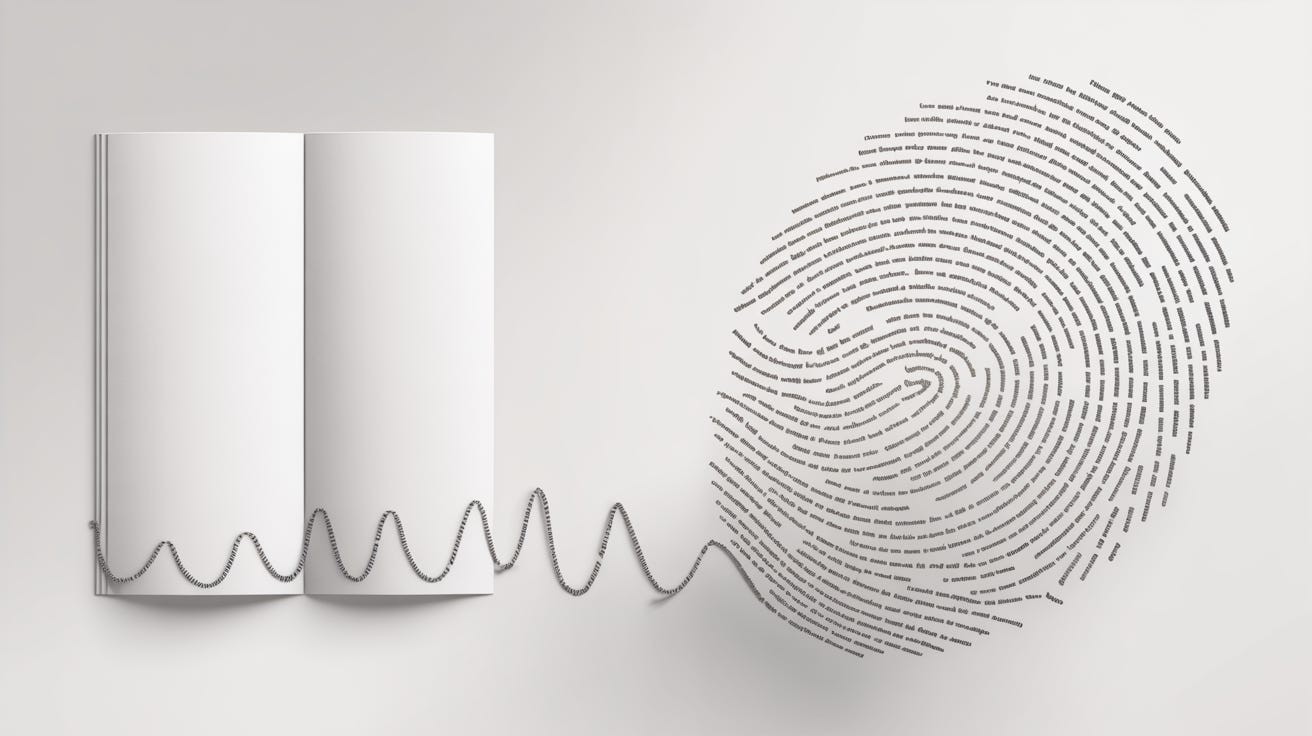
10. The ending that tucks you in and switches off the lamp
Then comes the conclusion, which the chatbot almost never forgets to provide.
A human being will sometimes stop at the right moment, or the wrong one, or in a way that feels abrupt but somehow satisfying. AI usually cannot resist landing the plane with both hands on the controls. It recaps the point. It narrows the frame one last time. It offers a clean final sentence with enough closure to suggest the paragraph went through legal.
That polish is impressive exactly once.
After that, it starts to feel canned. Every ending sounds like it has been polished to “strong finish” by a hidden rubric. The article never trails off, never smirks, never leaves a little smoke in the room. It concludes with the reassuring firmness of a hotel door closing softly behind you.
That is how you know the machine has had the last pass. It cannot bear to leave the reader with a jagged edge. It wants completion. It wants symmetry. It wants a nice final line that could survive a performance review.
Human endings are often stronger because they are willing to leave one button undone.
Yes, some humans already wrote like this
To be fair, chatbots did not invent this style. They found it in the wild and built a condo there.
Corporate consultants, PR departments, grant writers, university administrators, NGO strategy teams, and anyone who can say “stakeholders” without blinking had already spent years preparing the soil. AI did not create this voice from nothing. It industrialized an existing one.
That matters, because the real giveaway is almost never a single phrase. It is the full pattern. The scope-tightening. The polished transitions. The emotional caution. The neatly balanced caveats. The structure that looks suspiciously regular from ten feet away.
There is a broader backdrop here too. Stanford’s work on foundation models and homogenization gets at the same general worry, which is that a small number of systems can make lots of outputs start to resemble one another. You do not need to read the whole report to notice the effect. Open any five AI-polished posts on the same topic and the family resemblance starts yelling at you.
You are not catching a typo. You are catching a probability distribution wearing loafers.
What smart users actually do instead
The funny part is that AI can still be genuinely useful for writing. You just cannot let it put the final coat of paint on the wall and walk away whistling.
Good users make it do the ugly jobs first. Research. Compression. Structure. Counterarguments. Missing angles. Alternative phrasing. “What did I forget?” is a great use of a machine. “Please write this in a polished thought-leadership tone” is how you end up sounding like a regional vice president of nothing.
Cut the throat-clearing. Break the rhythm. Remove the fake balance when you do not mean it. Delete the consultant phrases as if they owe you money. Replace one perfect example with one odd, vivid, slightly inconvenient real one. Put in a sentence the machine would never dare write because it is too specific, too cranky, too amused, or too honestly yours.
That sentence is usually the keeper.
And when in doubt, leave a little mess in the draft. Clean enough to read. Rough enough to live.
The bottom line
By 2026, AI writing is often easier to spot precisely because it has become so polished.
It smooths the same corners. It reaches for the same handrails. It organizes the same way. It hedges in the same places. It tries to sound thoughtful by borrowing the same little rituals of thoughtfulness over and over until the performance itself becomes visible.
Once you notice that pattern, it is very hard to unsee it.
You start reading a post, an email, a founder memo, a press release, a LinkedIn sermon about resilience, and somewhere around paragraph three the feeling arrives. Not certainty, exactly. More like recognition. The tone is too calibrated. The structure is too neat. The ending is already ironing its shirt.
And that is the real tell now. Not bad grammar. Not one forbidden phrase. Not some single scarlet word.
Just the unmistakable sensation that a chatbot wrote the first draft, then a human committed the smaller but somehow sadder offense of leaving the fingerprints on.
Explore more from Popular AI:
Start here | Local AI | Fixes & guides | Builds & gear | AI briefing