



If you use AI to draft client work, newsletter posts, product copy, or articles, punctuation can give the game away before the reader has even decided what they think of the piece. One of the clearest tells is punch-up punctuation. That is the habit of dropping in em dashes to add drama, contrast, or emphasis to writing that is otherwise doing a pretty ordinary job.
The mark itself is not the villain. Guides from the UNC Writing Center and Merriam-Webster both make the same basic point. An em dash can stand in for other punctuation and it naturally adds force. Used sparingly, that can be useful. Used over and over, it starts to feel hurried, intrusive, and a little theatrical.
That is exactly why it shows up so often in AI-assisted prose. The model wants the sentence to feel lively, so it reaches for the quickest amplifier available. It does not add a fresh fact. It does not sharpen the image. It just cranks up the tone.
Readers notice more than they can explain. They may not say, “This paragraph contains an overworked punctuation pattern,” but they can still feel that something is off. The sentence sounds like it wants applause for making a point that is not especially original.
More about AI-assisted writing

What punch-up punctuation actually looks like
You know the move when you see it. A sentence makes a standard claim, then the dash arrives to make the thought feel deeper or more urgent than it really is. What comes after it is often vague uplift, fake contrast, or a general abstraction that does not carry much information.
That pattern matters because the em dash is flexible. It can behave a bit like a comma, a colon, a parenthesis, or a sentence break. That gives a language model a convenient way to sound expressive without committing to a cleaner structure. The punctuation creates pressure. The sentence still lacks substance.
In practical terms, this is why so much AI-edited copy ends up with the same rhythm. The prose keeps leaning on a familiar setup, a little burst of emphasis, and a soft landing in abstraction. The structure feels prefab because it usually is.
A repeated dash is not proof by itself that a piece was machine-assisted. It is better understood as a clue. Research on machine-generated text supports that broader view. A 2025 COLING paper on the limits of AI text detection found that punctuation and whitespace can become important features for classifiers, which says less about deep understanding and more about how visible these surface patterns can be. That should make every editor a little cautious. Surface tells are weak evidence in theory, but they are powerful in real workflows.
The real issue is bigger than one punctuation mark
The em dash gets attention because it is easy to spot. The deeper problem is repetition.
Large language models often rely on recurring syntactic templates and lower-variation sentence patterns more than human writers do. In the original draft, that was the most important idea, and it is still the one worth keeping front and center. A model does not just overuse one mark. It returns to familiar sentence skeletons, familiar turns of contrast, and familiar forms of empty emphasis.
That is why punch-up punctuation often travels with the same supporting cast. You see stock pivots. You see inflated conclusions. You see clauses that sound meaningful on first pass but do not actually add a fact, an image, or a useful inference. The dash is just the easiest wrapper for that habit.
Once you start looking for the larger pattern, the prose becomes easier to diagnose. The problem is not that an em dash exists on the page. The problem is that the sentence is doing too much tonal work and not enough informational work.
Why this matters for people who publish AI-assisted copy
If you use AI to make money, whether that means client work, a newsletter, landing pages, or editorial content, your job is not simply to generate words. Your job is to produce copy that survives contact with readers, editors, coworkers, and clients who are increasingly alert to stock AI style.
Punch-up punctuation gets in the way fast.
First, it makes solid ideas feel synthetic. Human writers usually use heavy emphasis selectively. AI systems often distribute it everywhere because each sentence sounds more energetic in isolation. Read a few paragraphs together and the energy starts to feel canned. The UNC Writing Center guide on dashes is useful here because it treats the dash as something that can easily break the flow of a piece when overdone. That is exactly the editorial problem AI users run into.
Second, readers and detectors both latch onto surface cues. The same COLING 2025 paper argues that punctuation marks and whitespace can become outsized signals in machine-generated text detection. In plain English, even heavily edited work can still look suspicious if the copy leaves behind too many obvious stylistic fingerprints.
Third, surface cues create a control problem. Institutions love shortcuts. If an editor, teacher, platform, or client can point to a few visible habits and call the piece “AI-ish,” that judgment can shape what happens next even if the evidence is shaky. In other words, weak heuristics still have strong consequences. Clean prose buys you room.
Why models keep falling back on em dashes
The simplest answer is that the em dash is a cheap all-purpose tool. It lets a model pivot, interrupt, summarize, amplify, or tack on an aside without fully reworking the sentence. A human writer can do that well because they are making deliberate structural choices. A model does it because the mark covers uncertainty.
That also explains why the habit appears in otherwise competent drafts. The sentence may be grammatically fine. It may even sound smooth when read alone. But the punctuation is doing too much of the style work. Instead of building emphasis through clear sequencing or precise detail, the draft injects emphasis from the outside.
You can see the attraction. It is fast. It is versatile. It sounds polished enough in the moment.
It also scales badly. Once that habit repeats across an article, the copy starts advertising the model’s presence.
How to strip the habit out of your workflow
The first fix is simple. Ban the move explicitly.
Telling a model to “sound natural” is usually too vague to help. The better approach is to give direct punctuation rules and say what to do instead. The OpenAI prompt engineering guide for the API makes that principle clear. Specific instructions work better than fuzzy preferences. So instead of saying “write like a human,” tell the model to use plain punctuation, avoid em dashes, prefer periods for complete thoughts, use commas for light asides, use colons only when they genuinely introduce or sharpen what follows, and save parentheses for brief background notes.
That kind of instruction gives the model a real lane to stay in.
The second fix is to show your house style. A short writing sample is often more useful than another paragraph of abstract guidance. If you want cleaner rhythm, lower drama, and more editorial control, give the model one paragraph that already sounds the way you want. Then ask it to match the sentence movement and punctuation discipline of that sample. The same OpenAI API best-practices page recommends examples for precisely this reason. Models respond well when the target is concrete.
The third fix is process. Draft first, polish second. Do not ask the model to invent structure, decide priorities, and perform a finished style all in one pass if you care about consistency. OpenAI’s ChatGPT prompting guide recommends breaking tasks into smaller steps and refining iteratively. That advice matters because a model that is trying to solve everything at once tends to fall back on canned rhetoric. Separate the job into stages and you reduce the temptation.
Run a dash audit before anything goes live
This step is boring, which is why it works.
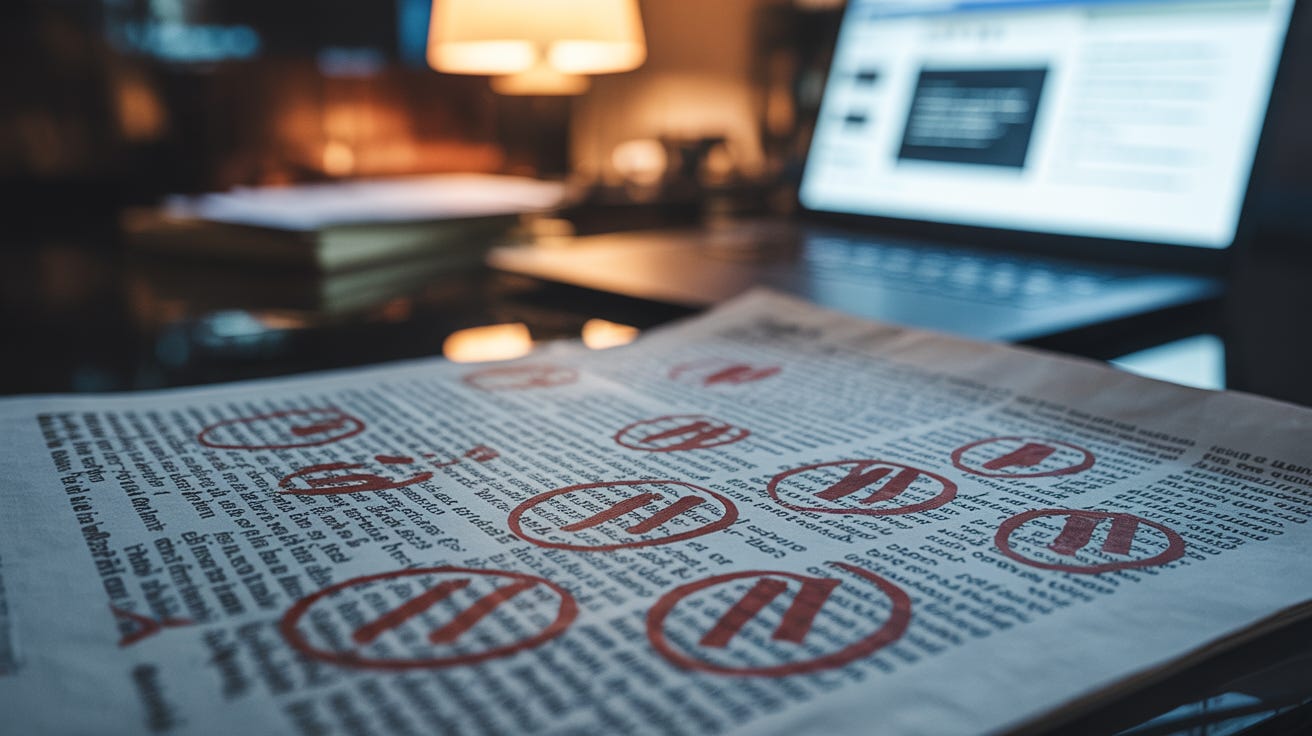
Before you publish or send a piece, search for every em dash and every double hyphen. Then force each one to justify itself. If it is linking two complete thoughts, try a period. If it is holding a mild aside, test commas. If it introduces a real explanation, try a colon. If the material belongs in the background, use parentheses or cut it.
The point is not to obey a rigid anti-dash ideology. The point is to stop letting the easiest punctuation choice make structural decisions for you.
This is where the standard references are actually useful in day-to-day editing. The UNC Writing Center explanation of dashes, colons, and semicolons and Merriam-Webster’s breakdown of dashes and hyphens both remind writers that the dash often substitutes for another mark. Once you see that, revision becomes easier. You are not staring at a magic symbol. You are deciding which function the sentence really needs.
Most of the time, a calmer choice improves the line immediately.
Cut the fake amplification too
Editing out the dash is only half the job. You also need to inspect what comes after it.
The most suspicious follow-up clauses are usually abstract and low-value. They announce that something is important, complicated, powerful, or part of a broader conversation. They sound like meaning. They rarely deliver it.
That is why good cleanup asks a second question after punctuation. Does the clause add a fact, a vivid image, or a sharp inference? If the answer is no, delete it or rewrite it in concrete terms.
This is the part many AI users skip. They replace the dash with a comma or a period, then keep the empty wording. The sentence becomes technically cleaner while still carrying the same dead weight. If you want the prose to feel human, you have to remove the hollow emphasis as well as the mark that announced it.
Build a finishing pass that targets AI tells
The easiest way to make this habit manageable is to turn it into a repeatable lint pass.
Once the draft is structurally sound, run one final instruction focused only on prose cleanup. You want the model, or your human editing pass, to check for em dashes, contrast templates, repetitive sentence openings, vague abstraction, and stock uplift. The target is not “more personality” in the abstract. The target is more variation, more precision, and less visible machinery.
A good finishing instruction can be blunt: revise for human editorial style, remove em dashes and low-value contrast moves, vary sentence openings, keep the meaning unchanged, and output only the revised text. That approach lines up with the broader advice in the OpenAI API guide and the ChatGPT prompting guide, both of which emphasize specificity, examples, and iterative refinement over vague requests for better writing.
Simple works.
The goal is not to erase every sign of assistance. The goal is to stop broadcasting the model’s default habits.
The practical takeaway for editors and AI power users
The em dash did not do anything wrong. The problem is that AI reaches for it as a cheap amplifier, and repeated cheap amplification makes readers feel the machinery behind the prose.
That is the real lesson from this article and from the draft it grew out of. When AI-assisted writing feels off, punctuation is often the first visible clue, but the underlying issue is a broader dependence on recycled form. The sooner you treat that pattern as an editing problem rather than a mysterious vibe, the faster your copy improves.
For anyone publishing AI-assisted work, the takeaway is straightforward. Treat punch-up punctuation like lint. Remove it before the piece reaches a client, editor, or public audience. The less your prose advertises a model’s stock habits, the more freedom you keep to use AI as a tool without inheriting its house style.
Explore more from Popular AI:
Start here | Local AI | Fixes & guides | Builds & gear | Popular AI podcast