



Every doomsday cult needs its apocalypse myth, and 2025’s technopanic is the “AI-slop” craze: breathless declarations that generative artificial intelligence is vomiting out so much synthetic garbage that genuine content is disappearing beneath a gray goo tide. Fast Company solemnly warns that “AI slop is suffocating the web,” while Wired catalogs AI-composed booty-rap and Santa-snorting-coke jingles infiltrating Spotify playlists.
But before blaming the crime on ChatGPT, remember: this exact same funeral has been loudly scheduled many times before. In fact, every time a new medium has emerged.
Earlier funerals that never happened
YouTube (2005-08). When Google paid $1.65 billion for an 18-month-old video site, pundits predicted the worst: everyone with a camera could now upload videos and tap into a global audience. How would anyone find anything worth watching amidst a deluge of shaky webcam footage featuring teenagers butchering the intro to “Smoke on the Water”?
But their fears never materialized. Content platforms utilized rudimentary but effective meritocratic algorithms, such as likes, views, and shares, that filtered watch-worthy material from a flood of low-effort uploads.
Blogging (2000-07). Andrew Keen’s The Cult of the Amateur thundered that blogs, and the wider digital revolution, would have a “destructive impact […] on our culture, economy and values”. The idea that anyone could write down their thoughts, publish them to the world, and gain a following felt like a barbaric invasion of a once-exclusive, pristine information ecosystem. An elitist reflex echoed by publishing monopolists and academia alike.
Yet less than a decade later, one would scarcely find a journalist or university professor making any significant purchase without googling niche blog reviews first. And to this day, bloggers routinely break stories legacy newsrooms miss.
Wikipedia (2001-06). Britannica loyalists scoffed at the notion of a user-edited encyclopedia. Yet a 2005 Nature study found its science entries roughly as accurate as Britannica’s, forcing critics into damage-control editorials.
In every case, the doomsayers were wrong. Open, transparent, merit-based feedback loops allowed quality content to rise and dross to sink.
Yet by 2025, the internet looks radically different. Google and YouTube searches are dominated by corporate media sludge, independent blogs have all but been ethnically cleansed from the internet, and Wikipedia has devolved into a catalogue of hit pieces against anyone who challenges the Narrative™ in any way.
So, what went wrong?
Politics, memes, and algorithmic warfare
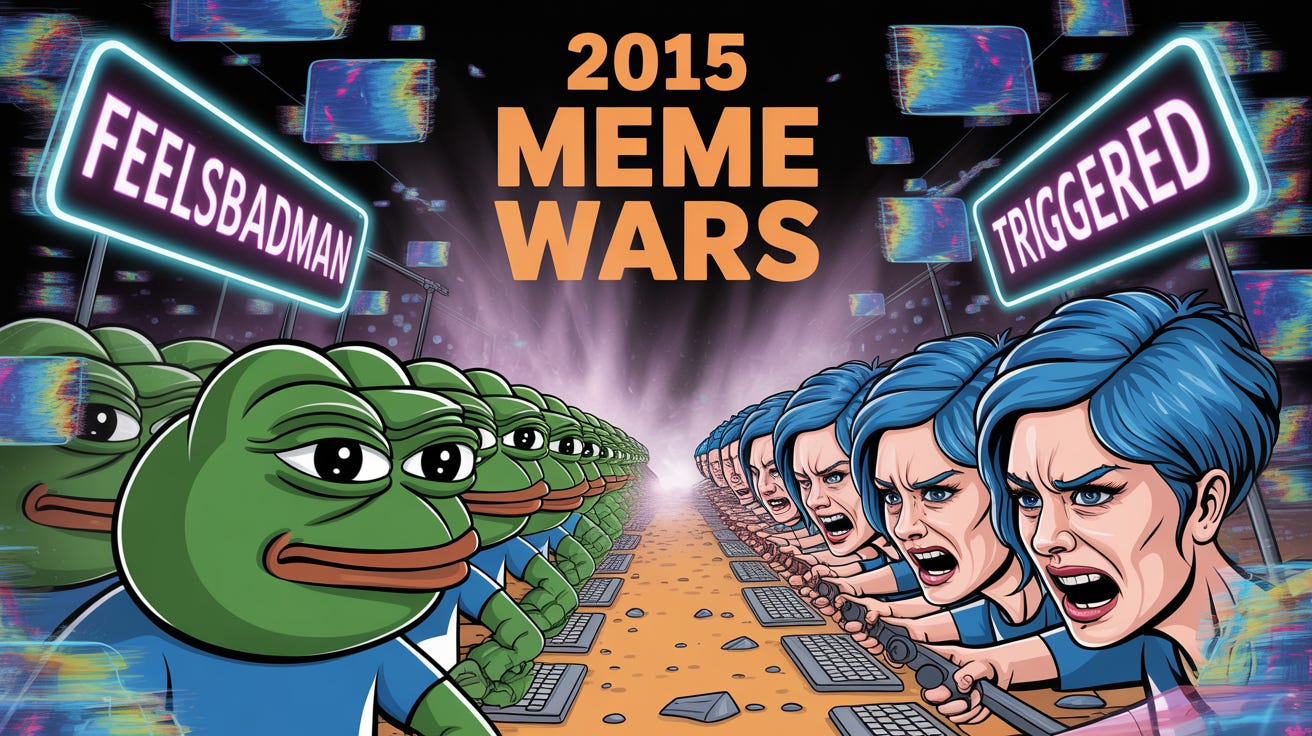
Since the inception of independent online media, legacy information gatekeepers in print media, television and academia had already been seething from the sidelines. They bemoaned the idea that unchecked plebeians were allowed to express opinions, or worse, debunk fake news, to vast audiences. But this Wild West of the internet truly became intolerable when it started producing politically inconvenient outcomes.
Gamergate (2014-15) was the first artillery volley. Activists tried to impose feminist orthodoxy on gaming culture. They had successfully done so in many other fields. Yet here, they were met with a meme-fueled insurgency instead of deference.
That skirmish primed the battlefield for 2016. Facebook groups and 4chan boards weaponized Pepe, Wojak, and “Kekistan” to mock the ruling class, contributing to Donald Trump’s upset victory, which the Washington Post dubbed “the most-memed election in U.S. history.”
For the first time, there were real-world, tangible consequences to losing the information war on the internet. No amount of waning establishment media influence could prevent the internet literally memeing an outsider into the White House.
Self-appointed elites learned a brutal lesson: an unfiltered internet can dethrone them, and playing fair was a losing strategy.
The strangling hands of centralization
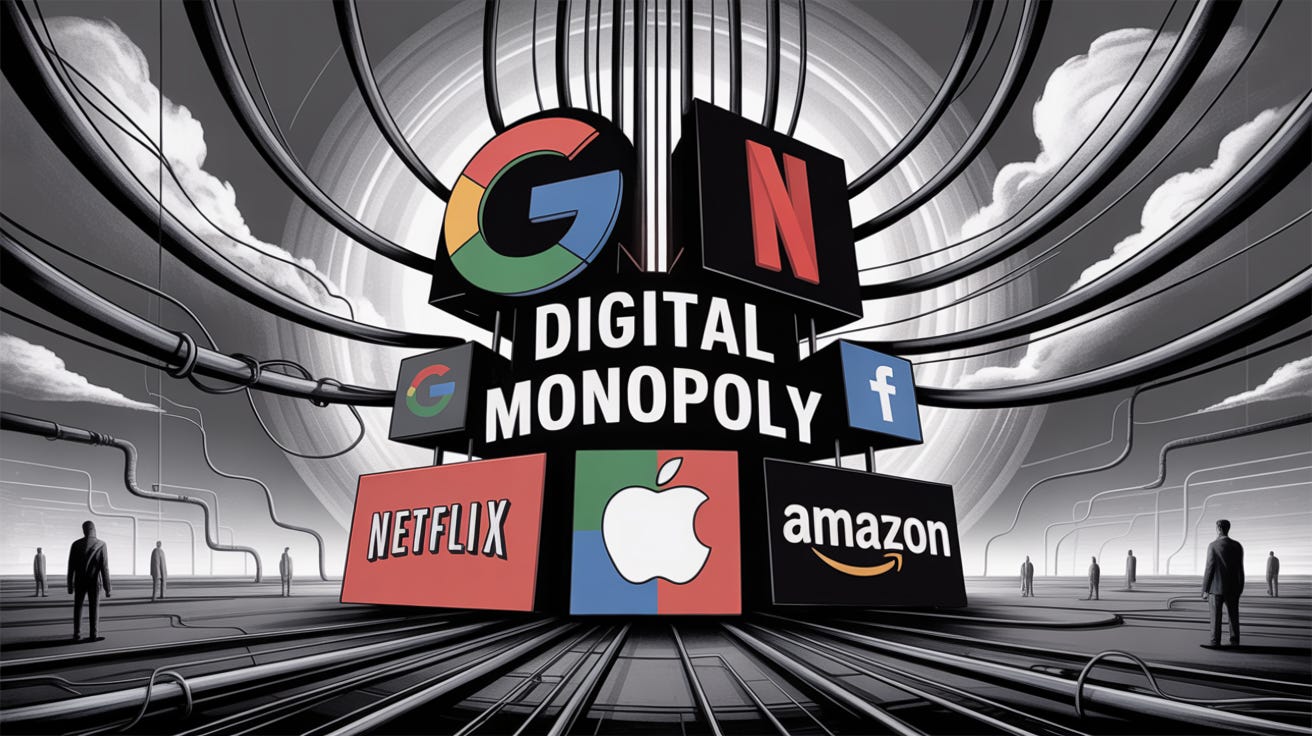
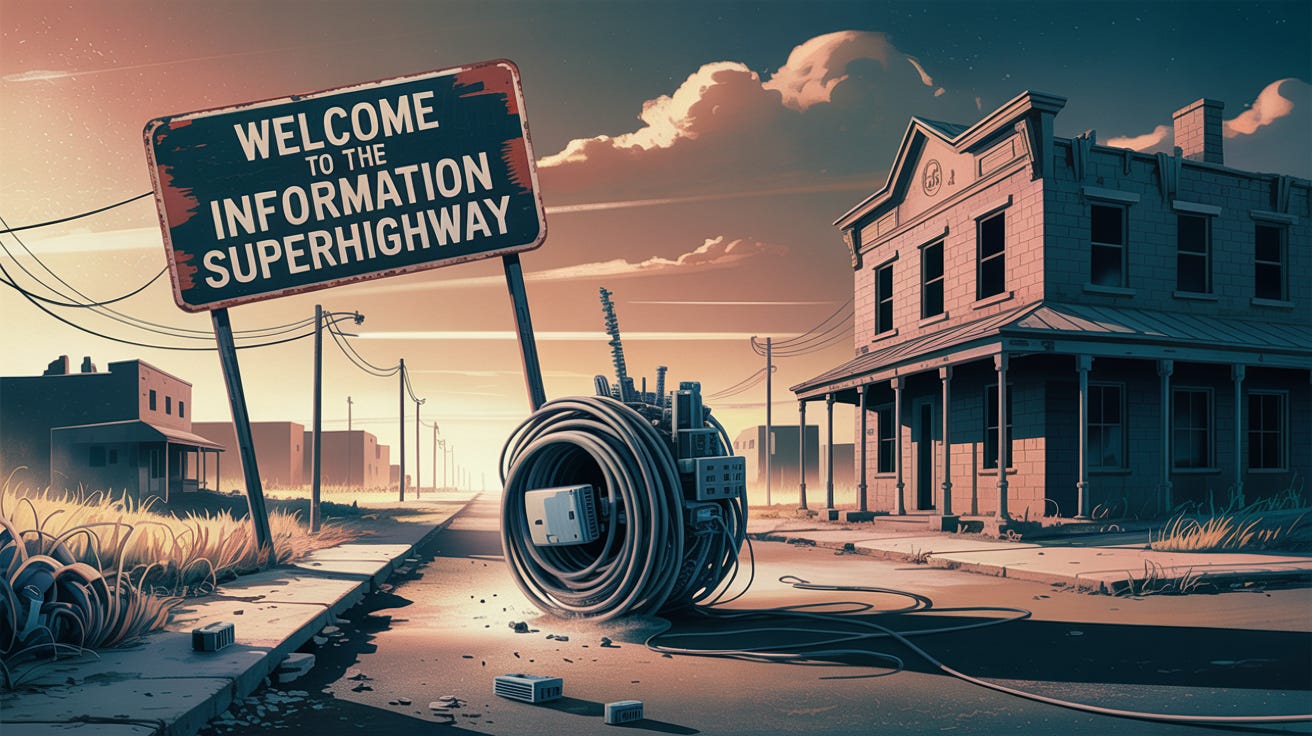
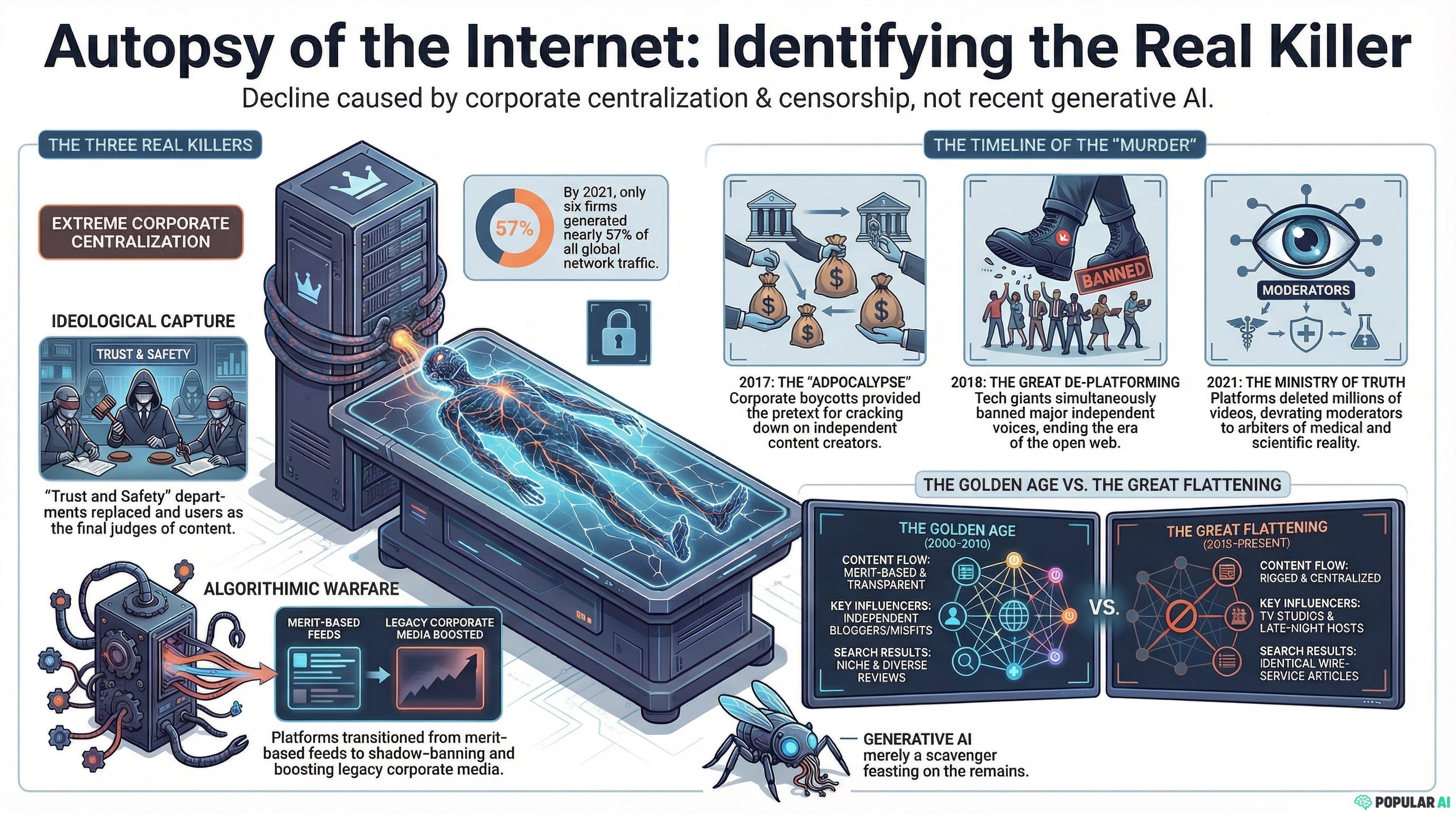
By then, the digital frontier had already been fenced. In 2021 just six firms, Google, Meta (Facebook), Netflix, Amazon, Apple and Microsoft, generated nearly 57% of global network traffic. Whoever rules the chokepoints controls the conversation.
YouTube. The 2017 “Adpocalypse” saw 250 major advertisers leave over “extremist content”, a coordinated corporate boycott that provided the pretext for a content creator crackdown. Independent youtubers faced opaque, ever more stringent “community guidelines” and ever-present demonetization threats. Meanwhile, legacy media channels were artificially boosted to the top of every feed.
Facebook. In January 2018, Mark Zuckerberg rewired News Feed to privilege “trusted sources”: a euphemism for establishment media.
Twitter. That same summer, users discovered that prominent Republicans and Trump supporters were disproportionally throttled on the platform. Even Vice called it “shadow-banning.”
The internet was no longer open, and the era of meritocracy was over. A cartel of ideological, corporate, and political “trust & safety” officers supplanted the end user as the arbiter of content suitability.
The Great De-Platforming
August 2018 was the Rubicon: Apple, Facebook, Spotify, and YouTube simultaneously banned Alex Jones and Infowars, who were at that point steadily outpacing traditional media in views and reach. He wouldn’t be the last.
In 2016, Milo Yiannopoulos was banned from Twitter for daring to criticize Leslie Jones’ performance in the flopped Ghostbusters reboot.
In 2018, Twitter de-platformed Gavin McInnes for “founding” the Proud Boys, an informal group that acted as de facto security for right-leaning speakers facing violent protest.
Stefan Molyneux, peaceful parenting advocate and host of “the largest and most popular philosophy show in the world,” saw his million-subscriber Youtube channel erased in 2020 amidst a flurry of rather cringeworthy racism accusations.
Add Paul Joseph Watson, Laura Loomer, and even the sitting president of the United States to the list. In 2021, Donald Trump’s social accounts were deleted by tech platforms gone mad with power.
Like them or not, these people shared one trait: they dominated the algorithms, and they were all guilty of offending the establishment’s delicate sensibilities.
To make matters worse, the big tech cartel used the 2020 coronavirus panic to morph into a veritable Ministry of Truth, disastrously elevating its minimum-wage content moderators to arbiters of scientific and medical reality.
In August 2021, Youtube gleefully announced that it had deleted 1 million videos with “Covid Misinformation.” Not included in the digital book burning: the establishment media’s now-debunked Covid reporting.
The message was unmistakable: independent content that threatens the Narrative™ will be throttled, or deleted outright.
The Great Flattening
Once the purge began, the web turned beige. The Verge’s 2019 obituary, “The golden age of YouTube is over”, lamented that the platform built by misfits now favored TV studios and late-night hosts. Search results became a graveyard of identical wire-service articles. Social feeds pushed legacy outlets no one voluntarily reads.
This dreariness wasn’t created by AI. It was caused by curators who decided risk-free, bland, corporate content was safer than the messy vigor of the old internet.
AI arrives at a crime scene
Enter ChatGPT, Midjourney, Sora. Yes, they can crank out synthetic clickbait and spooky-eyed portraits. But in a healthy ecosystem, low-effort sludge would sink. Today it floats, precisely because algorithms are already rigged to elevate unthinking conformity.
The algorithms no longer want you watching a 5-hour exposé on the fraud of fractional reserve banking. Instead, your tech overlords want you hooked on endless brain-rotting cat videos and “hawk tuah girl” shorts.
AI didn’t cause the rot. It merely scales it.
Name the real killer
The autopsy is clear:
Centralization funneled users into a handful of tightly controlled internet ghettos.
Ideological capture turned “trust and safety” departments into commissariats for establishment orthodoxy.
Algorithmic manipulation & purge waves silenced dissent and rewarded monotony.
AI, at worst, is an opportunistic vulture feasting on a corpse that died in 2018. Blame belongs to the human hands that tightened the noose.
So stop shouting at the robot mortician.
Rebuild the frontier: Own your media. Decentralize. Mirror your data. Speak freely, and let the down-votes fall where they may.
Explore more from Popular AI:
Start here | Local AI | Fixes & guides | Builds & gear | Popular AI podcast
The “AI killed the internet” narrative leaves out a lot of history. Long before AI slop became the latest panic, algorithmic feeds, SEO spam, clickbait, platform incentives, and centralized gatekeepers were already changing the web for the worse. What do you think did the most damage to the internet, and is there any realistic path back to something better?