



Ring says it has canceled its planned integration with Flock Safety, a company best known for automated license plate readers used by police departments. The timing is hard to miss. The announcement lands right as people are still arguing over a Ring Super Bowl ad that imagined doorbells working together like a neighborhood search grid, packaged as a warm story about finding a lost dog.
If your readers have been saying for years that “consumer convenience” is the sales funnel for a privatized surveillance state, this week handed them a clean case study.
Ring’s retreat, explained in corporate language
In Ring’s announcement, the company frames the decision as a management call. Ring says the planned integration would take “significantly more time and resources than anticipated,” so the companies made a “joint decision” to stop work. Ring also emphasizes that the integration never launched and that no Ring customer videos were ever sent to Flock.
That detail matters, but it also reveals the broader strategy that keeps showing up in consumer surveillance. The connection gets built first. The normalization campaign comes later. Once the pipeline exists, the argument shifts from “should this exist” to “who gets to use it,” and by then the infrastructure is already in place.
Flock’s version is similarly careful. In Flock’s update, the company says canceling the integration lets each side “best serve” customers and communities. It reads like reassurance, right up until you remember the business model in plain terms: sell networked sensors to local governments, market it as safety, and let mission creep do the rest.
The backlash wasn’t really about a dog
The Super Bowl ad controversy matters because it showed how fast people understand the implications once marketing gets too honest. In the ad’s world, a dispersed mesh of doorbells becomes a ready-made “search party.” Critics saw the obvious next step. Today it is a golden retriever. Tomorrow it is a protester. Or an ex-partner. Or a journalist’s source. Or a “person of interest” that a federal agency wants located.
An Associated Press report captured the moment by
noting that Ring scrapped the partnership amid the controversy, even as Ring insisted the ad and the decision were unrelated. That kind of denial is familiar. Companies rarely say public outrage forced a retreat. “Technical complexity” and “resource constraints” are safer phrases because they avoid admitting that regular people can still veto a rollout.
Canceling one integration doesn’t change the architecture
There is a reason the reaction has not settled into relief. The Verge’s reporting argues that dropping Flock does little if Ring remains structurally tied to law enforcement through other channels. If the broader system still nudges people to share footage with police, swapping partners is mostly a press-release fix.
This is the part that deserves the spotlight. Surveillance is rarely one feature, one partnership, or one scandal. It is a direction of travel. More cameras. More automation. More searchable footage. More cross-platform stitching.
Even when one deal dies, the incentives that created it remain.
“Opt-in” sharing is still a pressure campaign
Ring defenders often point to opt-in sharing and user control. In practice, opt-in becomes persuasion. Police departments ask for footage. Ring sends push notifications. Neighborhood groups amplify fear. People comply because refusal starts to feel like being the one person who did not help.
That social pressure is why the infrastructure itself is the story. Even without an explicit Flock integration, the long-term trajectory stays familiar: a network of consumer cameras plus government-facing tools creates a soft, everyday dragnet. When a company sells you a security device, it also creates a map of civilian life that becomes valuable to institutions that want visibility.
In its weekly roundup, Wired put Ring’s decision alongside the broader expansion of surveillance tools, including government appetite for facial recognition. Ring is one part of an ecosystem that keeps converging, because the market rewards companies that make data easier to collect, search, and share.
Politicians oppose surveillance when it becomes unpopular
Sen. Ed Markey, a long-time Ring critic, praised the cancellation as a step against an “ever-expanding network of surveillance technologies,” according to Markey’s statement. Credit where it is due, but the political rhythm is worth naming. Civil liberties often get loud attention only after backlash becomes useful.
The harder questions are the ones corporate PR does not want framed as policy questions.
Who owns the footage in practice when cloud storage is the default and the incentives favor sharing? Who audits false positives when automated labeling and face recognition tools misidentify people? Who pays the price when “community safety” turns into an always-on neighborhood dragnet?
Doorbell cameras are becoming social infrastructure
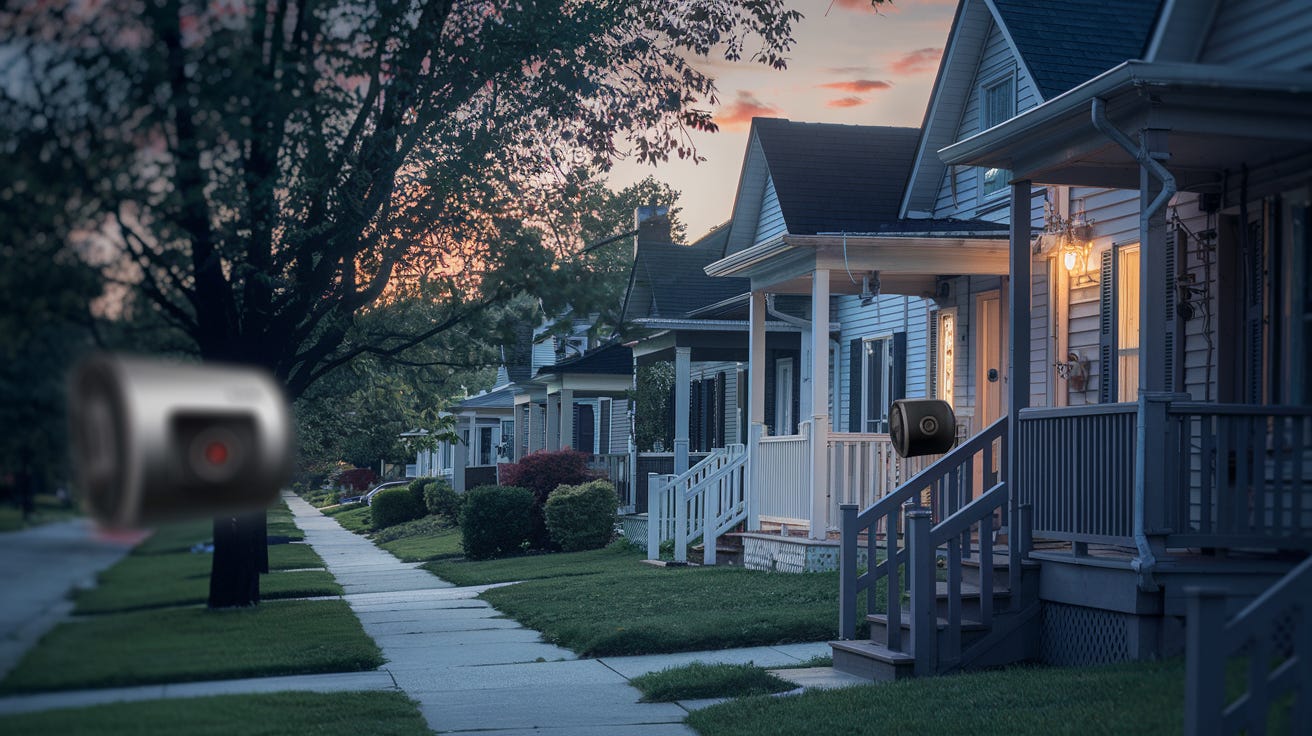
Part of what makes this debate so heated is that these devices are not just gadgets anymore. They reshape how neighbors see one another, and they can shift everyday life toward suspicion and reporting.
The Guardian’s coverage captured that cultural shift by treating doorbell cameras as a kind of community infrastructure, not a private purchase. Once enough homes adopt the same tools, the neighborhood itself changes. A front porch becomes a sensor. The street becomes a searchable record.
That is why the Super Bowl ad landed so awkwardly. It briefly showed what the marketing usually keeps off camera. A “helpful neighborhood” can also become a network.
What readers can do that actually matters
This episode is a reminder that public resistance still works when it hits the adoption curve and reputational risk. Ring backed off because partnership announcements are optional. The surveillance business model keeps humming either way.
If your goal is less extraction of data, the liberty-minded move is to shrink the data exhaust.
Choose local-first security setups where video stays on a device you control. Treat “neighborhood safety” apps as data brokers with a friendly interface. Push your city council to require public reporting for any police use of third-party camera networks and AI identification tools. Ask for architectural limits that make abuse difficult, not policy promises that can be rewritten.
Ring dumped Flock. The machine is still there.
The question now is whether the public treats this as a one-week scandal or as the operating system of modern governance.
Explore more from Popular AI:
Start here | Local AI | Fixes & guides | Builds & gear | AI briefing