


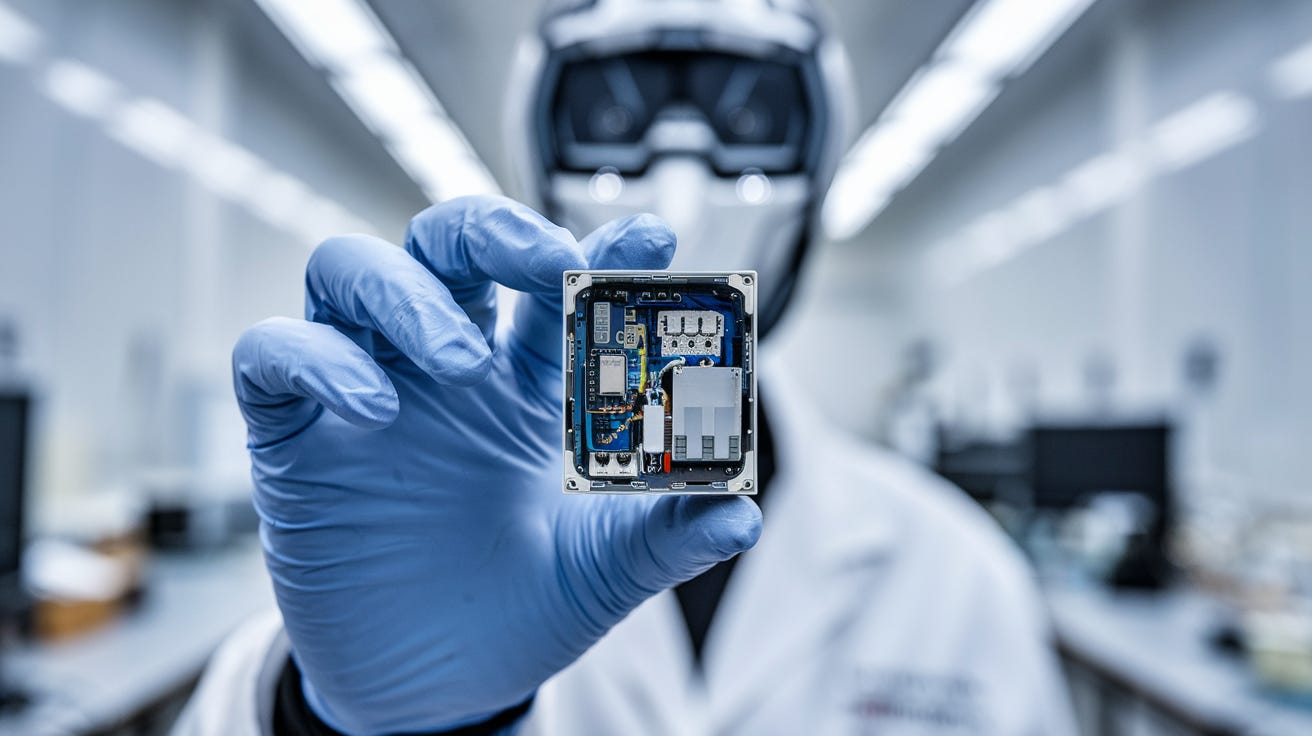
AI is moving out of chat windows and into machines that navigate the real world. On February 10, 2026, Alibaba’s DAMO Academy released RynnBrain, an “embodied AI” foundation model family aimed at robots and devices that need to perceive, reason, and act over time.
Early coverage framed it as a meaningful escalation in physical AI, especially because the weights are open: see the reporting from Bloomberg and Caixin Global.
Why open weights matter once AI has a body
“Embodied AI” does not just replay internet-era battles. It relocates them into homes, workplaces, warehouses, and transit systems.
When robots rely on closed, proprietary cognition, whoever controls that model can become a choke point. Policy pressure, liability rules, and compliance regimes can all be routed through a small number of vendors. Over time, “safety” can quietly turn into a permission system that decides what machines are allowed to do and who is allowed to build them.
Open model families weaken that default. They raise the cost of turning “safety” into a permanent licensing moat.
What RynnBrain does, in plain English
DAMO describes RynnBrain as a “physics-aware embodied brain.” In practice, that means it is designed to interpret egocentric scenes, ground language in physical space and time, and support downstream robotics tasks such as localization and planning.
If you want the clean starting point, go straight to the RynnBrain repository for code, documentation, and examples.
What Alibaba actually released
This release is presented as a family of models, with multiple sizes and task-tuned variants. Alibaba also included a benchmark dataset so performance claims can be checked rather than taken on faith.
For a representative checkpoint and setup guidance, the RynnBrain-8B model card is the most direct entry point.

Open source is strategy, not charity
In embodied systems, incumbents often prefer gated releases. It protects competitive advantage and can make regulatory conversations simpler because fewer actors have access to powerful capabilities.
Alibaba is taking a different route: push adoption fast, make the primitives cheap to build on, and benefit if the ecosystem standardizes around your approach. That is not altruism, but it can still expand outsider capability in a way closed robotics stacks do not.
How to run it locally for experimentation
This is not “download and chat.” You will get the most value if you treat it as a developer model you can probe, test, and adapt.
The quick start in the model documentation references Transformers 4.57.1 and the image-text generation class they expose:
pip install transformers==4.57.1from transformers import AutoModelForImageTextToText, AutoProcessor
model_id = “Alibaba-DAMO-Academy/RynnBrain-8B”
model = AutoModelForImageTextToText.from_pretrained(model_id, device_map=”auto”)
processor = AutoProcessor.from_pretrained(model_id)For practical next steps, start with examples and notebooks in the repository and then iterate from the model card as you learn what the model is good at.
How regulators will react
As embodied AI goes mainstream, expect familiar institutional moves: identity requirements, monitoring, permissioning, and liability standards that conveniently match what only large incumbents can afford.
Open models complicate that plan, which is why they also attract scrutiny. Media coverage often emphasizes misuse risk, and that risk is real. The key question is what the proposed remedy builds in response. Reporting like this Reuters piece on misuse concerns around open models is worth watching, not just for the risk discussion, but for how quickly “mitigation” can drift into durable gatekeeping.
RynnBrain is a step toward making robotics cognition easier to access and harder to centralize. Even if Alibaba’s stack is not your long-term choice, open weights plus public benchmarking push capability outward.
That matters if “physical AI” becomes the next compliance battleground.
Explore more from Popular AI:
Start here | Local AI | Fixes & guides | Builds & gear | AI briefing