


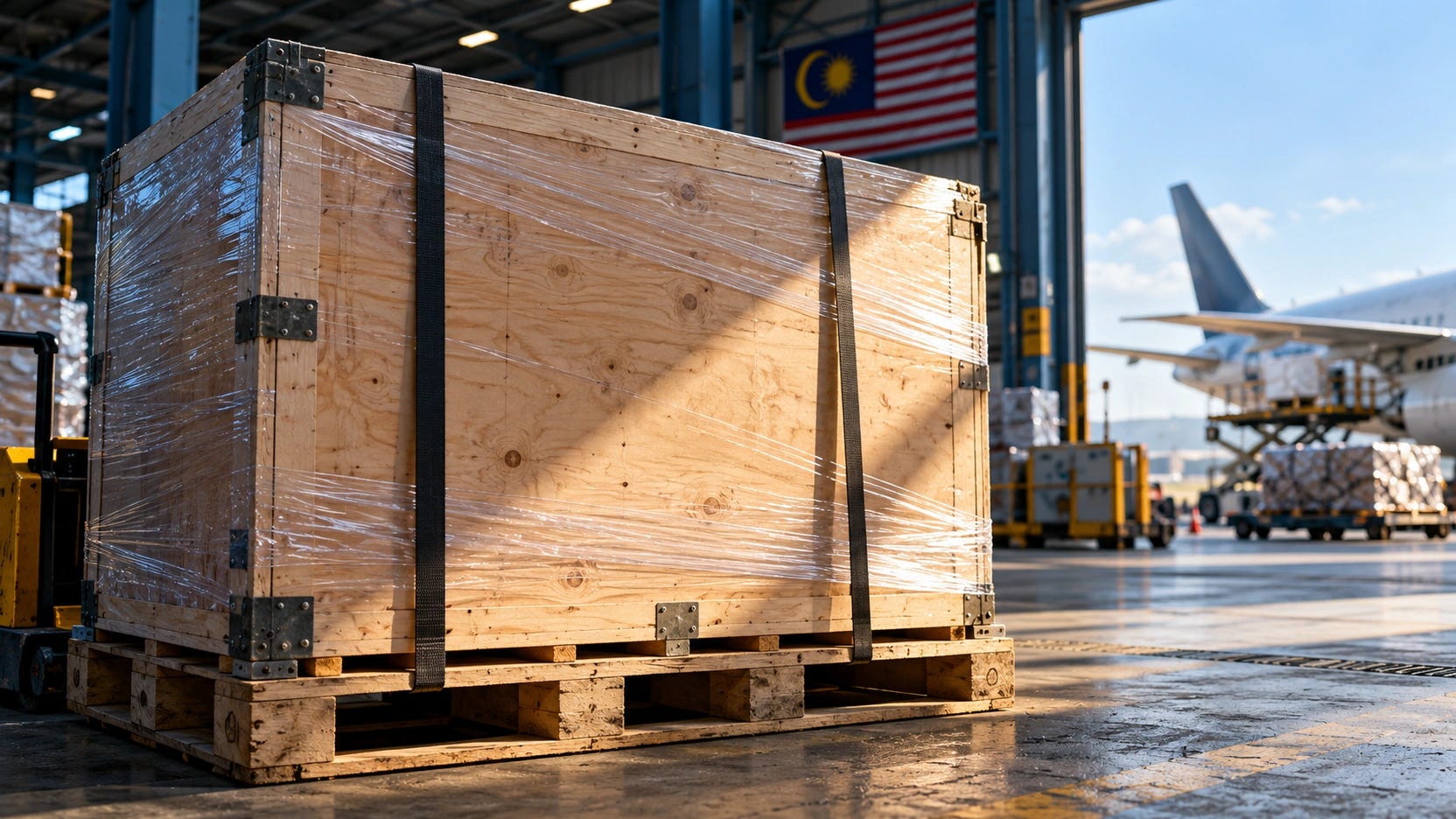
Malaysia has seized 30 servers containing advanced AI chips worth about $12.1 million, but officials have withheld the detail most likely to explain the shipment: its destination. Customs intercepted the cargo at Kuala Lumpur International Airport on October 15, 2026, and announced the seizure on October 28. The servers were due to leave for another Asian country. Officials won’t say which one.
The missing destination invites speculation about China and U.S. chip restrictions. What authorities have alleged so far is an improperly declared shipment that lacked the required authorization for onward movement. They have not identified the chip manufacturer, final recipient, or original shipping country. The Associated Press reported that officials declined to disclose the shipment’s origin or final destination while the investigation continues.
What customs found at Kuala Lumpur airport
Customs officers inspected a warehouse in the airport’s free trade zone around 11:30 a.m. on October 15, according to Malaysia’s Bernama news agency. They found 30 server units containing what officials described as advanced AI chips. The cargo had arrived from an unidentified Asian country under one air waybill and was declared as electronic components.
KLIA customs director Aspalila Ag. Tuah said preliminary inquiries indicated that the equipment was due to be re-exported to a different Asian country without the necessary approval. Customs alleges that the cargo description was intended to avoid detection. That allegation has not been adjudicated.
Officials also suspect a connection to a wider smuggling operation. At the October 28 briefing, Aspalila said this was the fifth case linked to a suspected network in 2026, with goods worth more than RM100 million seized across the cases. A previous airport operation in June uncovered 72 servers containing advanced AI chips. A Malaysian company involved in arranging the latest shipment has been asked to assist investigators. No arrests had been made at the time of the briefing.
Customs valued the latest cargo at approximately RM49.5 million. The equipment has been seized, but the authorities’ account of an attempt to evade controls remains an allegation. Investigators still need to establish the reported connection between this shipment and the earlier cases.
Malaysia’s AI chip export rules also cover transit
Why can Malaysia intervene in a shipment that was never meant to stay there? Its controls extend to goods passing through the country, including cargo held at an airport on its way to another destination.
In July 2025, Malaysia’s Ministry of Investment, Trade and Industry (MITI) announced controls on the export, transit and transshipment of high-performance U.S.-origin AI chips. The government invoked Section 12 of the Strategic Trade Act 2010, which covers certain unlisted items when there is knowledge or reason to suspect they may be connected to restricted activities. MITI said the measure would close a regulatory gap while officials considered changes to the strategic-items list.
Export, transit and transshipment describe different movements. Cargo may leave Malaysia as an export or pass through a port or airport logistics facility on its way elsewhere. A server doesn’t have to enter the domestic retail market for customs to scrutinize its onward journey.
MITI’s updated industry guideline explicitly says the rules apply in free industrial and free commercial zones. The location of this seizure is therefore relevant. The airport’s free trade zone may be an intermediate stop for a freight company, but the directive still applies there.
Which AI chips are controlled, and how does a permit work?
Malaysia doesn’t require special approval for every laptop GPU or ordinary server. Its revised Directive No. 1/2025 identifies technical categories of advanced accelerators and associated computers. One principal category, 3U090, uses thresholds for total processing performance (TPP) and performance density. Category 4U090 covers computers, electronic assemblies and components containing qualifying chips. Other referenced categories cover related hardware.
These classifications depend on technical specifications, rather than whether a product carries an AI label. Operators need to assess the manufacturer’s specifications, the applicable export-control classification and the intended movement together. Officials haven’t named the seized processors, so outsiders cannot independently check which category each server falls under or which technical threshold it meets.
The current industry instructions describe an assessment process rather than a universal ban. If equipment meets the specifications, or its classification is uncertain, the operator submits an AI Chip Assessment form at least 30 days before the relevant export, transit or transshipment. The Strategic Trade Secretariat then determines whether a permit is necessary.
The form asks for chip models, manufacturers, origin, technical data, onward destination, end user and intended use. Where applicable, the paperwork includes re-export authorization from the originating country. Those details allow the authorities to assess both the hardware and the proposed transaction before the cargo moves.
An updated MITI notice says companies holding Internal Compliance Program status became eligible to seek multiple or bulk permits from December 3, 2025. That can streamline repeated lawful shipments for established operators. Occasional traders still need to identify their equipment correctly and complete the required notification work.
Strategic Trade Act penalties can reach RM20 million
Customs and MITI officials said the investigation is proceeding under Section 12 of Malaysia’s Strategic Trade Act. For unlisted items other than arms or related material, the official guideline’s penalty summary sets different maximum penalties according to intent and knowledge.
For an intentional violation or one committed with knowledge, a company can face a fine of up to RM20 million. An individual can face a fine of up to RM10 million, imprisonment of up to 10 years, or both. For an unintentional violation or one committed without knowledge, the stated ceilings are RM10 million for a company, and RM5 million or five years for an individual, or both.
These are maximum statutory penalties. None had been imposed in this case at the time of the October 28 briefing, when officials had announced no arrests or convictions connected to the October seizure. The investigation must establish what happened before any question of punishment can be settled.
The destination is still undisclosed
The geopolitical setting explains the attention. The United States has restricted China’s access to certain advanced semiconductors, and Malaysia introduced its U.S.-origin chip controls amid concerns about indirect routes through third countries. Reuters placed the seizure in the context of U.S. pressure to stem the flow of advanced chips into China.
A route through Malaysia cannot identify the ultimate customer. The public account describes an alleged unauthorized onward shipment to another Asian country. It doesn’t establish that the destination was China, that NVIDIA or any other named supplier manufactured the chips, or that a military organization intended to use them.
Officials have said the chips could have military applications. That potential helps explain why advanced computing hardware attracts scrutiny, but it doesn’t establish a military buyer for these servers. Assessing the claimed end use would require the manufacturer, model, export classification, consignee and end-use documentation.
The unanswered questions are concrete. Who owned the servers? Which company was supposed to receive them? Where had they first been shipped from? Which specifications put them within Malaysia’s controls? What evidence connects this cargo to the earlier seizures? Authorities may possess some answers, but they had not disclosed them publicly at the time of publication.
What the seizure means for AI hardware buyers and operators
For people running AI on their own PCs, this seizure changes nothing about which models they can use at home. The controls discussed here concern cross-border movements of specified high-performance hardware. They don’t regulate the act of running local inference. Our analysis of the U.S.-China AI dialogue examines the broader international limits on chips and models.
Businesses importing, warehousing, forwarding or reselling high-end AI servers face a more immediate task. Before arranging an international shipment, they need accurate model identification, technical classifications, origin and re-export documentation, and details of the final customer. If the goods meet the directive’s thresholds or their status is uncertain, MITI’s assessment process should come before the cargo moves. An airport free zone doesn’t remove that obligation.
The paperwork also imposes costs. Identifying the ultimate user and securing re-export authorization may be routine for large distributors. Small brokers dealing in secondhand hardware or complicated supply chains can have a harder time assembling those records. That administrative burden falls on lawful traders too. Difficulty completing the paperwork, by itself, doesn’t establish illicit trade.
More on AI geopolitics:

What would explain Malaysia’s $12.1 million AI server seizure?
The October 15 seizure shows how export controls can halt valuable AI hardware while it is changing planes or warehouses. Customs has described a suspected permit violation and a possible smuggling network. It has not released the details needed to establish where the servers were headed or who intended to operate them.
Hardware models, a named final destination, or formal charges would give readers something firmer to assess. Until then, Malaysia has enforced trade controls against a $12.1 million shipment, while the most politically charged claims about its destination and intended use remain unproven.
Explore more from Popular AI:
Start here | Local AI | Builds & gear | Autonomy & policy | Fixes & guides | Popular AI podcast