


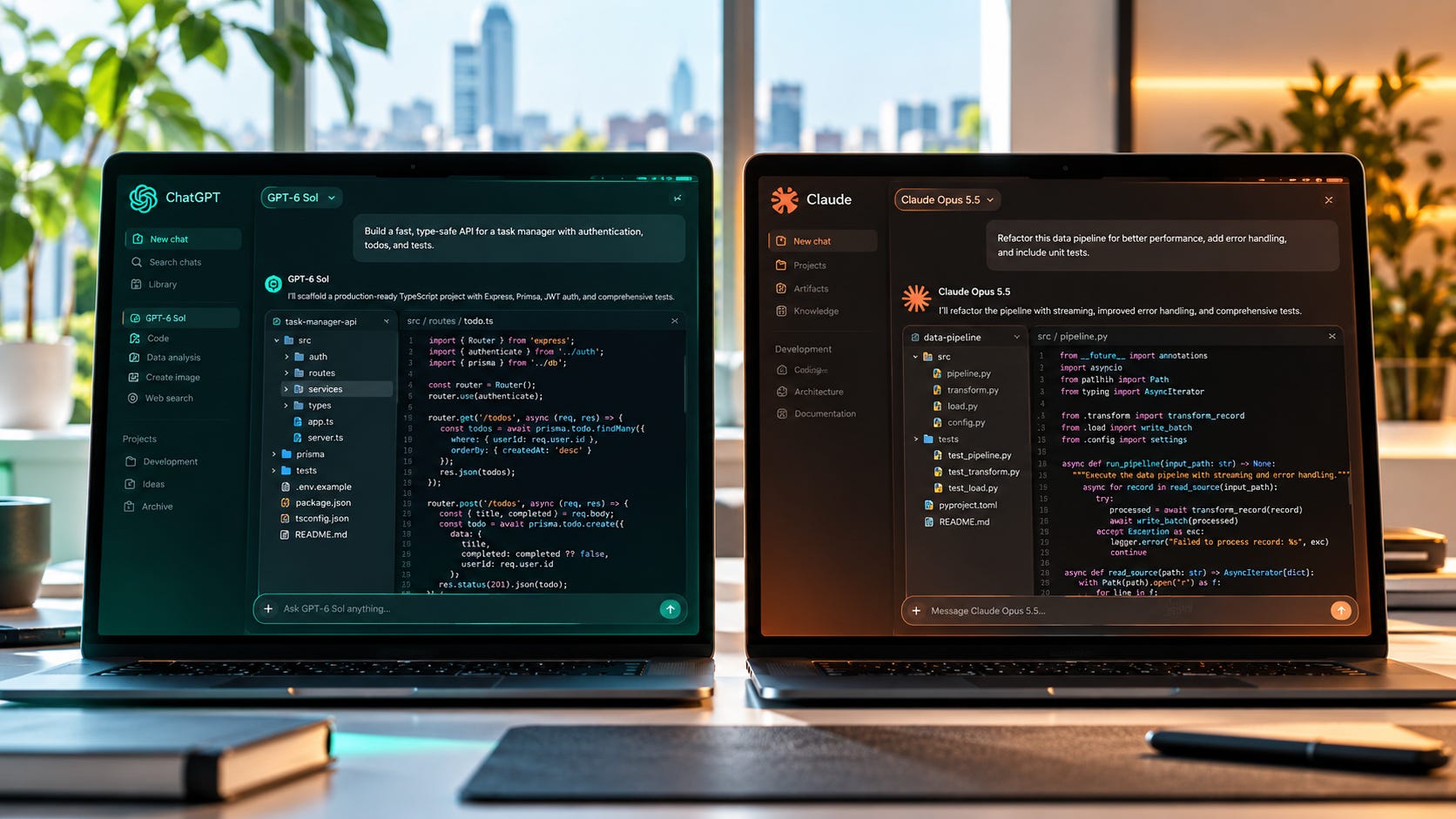
GPT-6 Sol and Claude Opus 5.5 landed on September 22 with an inconvenient tradeoff for developers. OpenAI launched GPT-6 Sol at $2 per million input tokens and $10 per million output tokens for standard requests, exactly half Claude Opus 5.5’s headline $4 input and $20 output rates.
That makes Sol the cheaper model per standard token. It does not automatically make Sol the cheaper way to finish a coding job.
Early independent coding tests put Opus 5.5 ahead on completion quality and speed, while Sol costs much less per attempt. For routine implementation, repetitive edits, test generation, and high-volume coding, GPT-6 Sol is the better default right now. For difficult repo-wide changes, ambiguous debugging, architecture work, and autonomous jobs where a bad run can waste substantial human time, Claude Opus 5.5 has an early case for earning its premium.
There is also a pricing trap inside very large contexts. GPT-6 Sol supports a 1.05 million-token context window, but requests above 272,000 input tokens are billed at higher rates for the full request. Once that threshold is crossed, the easy rule that Sol costs half as much stops working.
Key takeaways: GPT-6 Sol vs Claude Opus 5.5
GPT-6 Sol is the better cost-first coding default. Below its long-context threshold, API input and output tokens cost half as much as Opus 5.5.
Opus 5.5 leads the strongest early direct coding comparison in this article. AI Coding Daily measured higher scores and faster completion for Opus 5.5, while its average API cost per prompt was roughly 2.5 to 2.7 times Sol’s.
Retries can erase Sol’s sticker-price advantage. In the same test suite, one medium-effort Opus run averaged $0.56. Sol averaged $0.21. Three comparable Sol attempts would cost more than one Opus attempt.
Huge contexts change the economics again. Anthropic keeps standard Opus pricing across the full 1 million-token window, while Sol moves to higher rates above 272K input tokens.
Subscription quotas are harder to compare than API pricing. Both companies offer $20 monthly entry-level plans with coding access, but OpenAI publishes estimated Sol message ranges while noting that actual usage varies. Anthropic uses workload-dependent rolling and weekly limits rather than a fixed message count.
Both models launched straight into the coding fight
OpenAI released GPT-6 Sol on September 22 as a general-purpose reasoning model with a strong coding and agent focus. It supports up to 1.05 million tokens of context, up to 128,000 output tokens, and reasoning effort settings from none through max, with medium as the default.
Sol is available through the API and Codex. OpenAI also put GPT-6 Sol inside ChatGPT Work and Codex rather than the ordinary Chat model picker. Codex remains the software-development-focused environment.

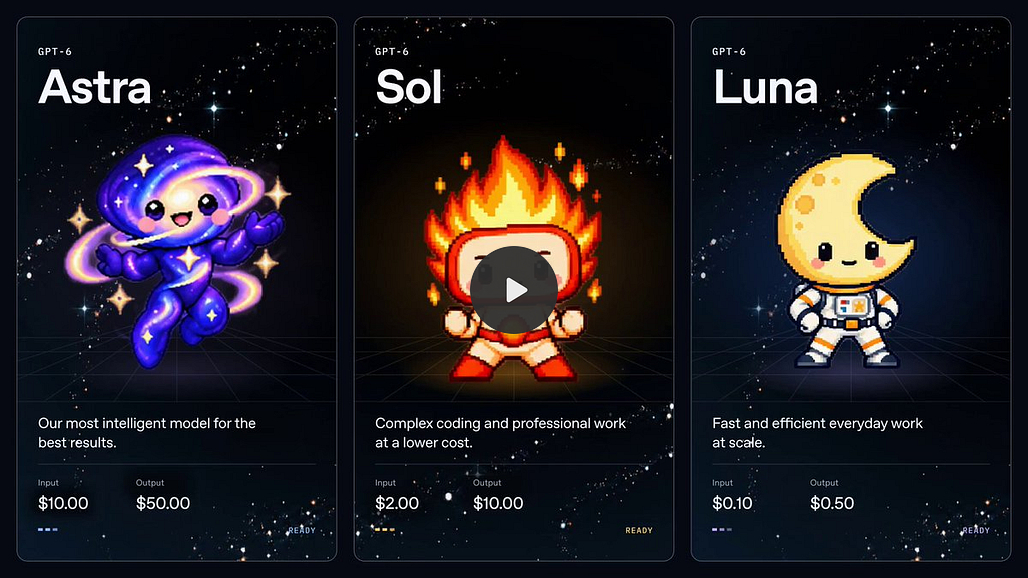
Anthropic released Claude Opus 5.5 on September 22 with a 1 million-token context window, 128,000 maximum output tokens, and adaptive reasoning that is always active. Effort controls determine how aggressively it reasons.


Opus 5.5 is available through Claude, Claude Code, Anthropic’s API, and supported cloud platforms. Both models are proprietary hosted services. There are no model weights here to pull onto an RTX 5090 or a home server.
That makes this a fairly clean commercial coding comparison. Sol gives you cheaper attempts and finer control over reasoning spend. Opus asks you to pay more up front, with the early evidence suggesting that premium can buy better completion quality on harder coding work.
GPT-6 Sol is half the price… until the context gets huge
For ordinary API requests, the headline comparison is simple.
GPT-6 Sol costs $2 per million input tokens, $0.20 per million cached input tokens, and $10 per million output tokens. Claude Opus 5.5 costs $4 input, $0.20 cache reads, and $20 output.
The cache-read price is identical. That detail gets lost when the comparison stops at fresh input and output.
Anthropic says cache reads cost $0.20 per million tokens and make up the majority of agentic and coding workload costs in its own characterization. That is Anthropic describing its workload mix, not an independent measurement, but it explains why cache economics deserve their own line in a coding budget.
Take a straightforward request with 100,000 fresh input tokens and 10,000 output tokens. Ignoring tool charges and cache writes, Sol costs about $0.30. Opus costs $0.60.
That is the clean 2x gap the pricing pages suggest.
Now make the repository much larger.
Once a Sol request exceeds 272,000 input tokens, OpenAI doubles the input and cache rates and raises output pricing by 50 percent for the entire request. In practical terms, that means $4 per million input tokens, $0.40 cached input, and $15 output.
Anthropic takes a different approach. Claude 4.6-and-later models keep standard pricing across the full 1 million-token context window.
A 900,000-token fresh prompt followed by 20,000 output tokens therefore costs roughly $3.90 on Sol and $4.00 on Opus 5.5.
The supposed 2x price gap has almost disappeared.
With a 900,000-token cache hit and the same 20,000 output tokens, again excluding the original cache-write cost, the arithmetic flips. Sol lands at about $0.66, while Opus lands at about $0.58.
That does not make Opus generally cheaper. It means developers running enormous, cache-heavy repository contexts should stop multiplying base token prices and assuming the result describes their actual bill.
Does Opus 5.5 earn its premium on actual coding?
The strongest early head-to-head in the source material comes from AI Coding Daily, which tests coding agents across several software projects rather than relying on isolated programming questions.
As of September 24, its medium-effort Claude Opus 5.5 configuration scored 57.37 out of 60, averaged $0.56 per prompt, and completed runs in 2 minutes 4 seconds. GPT-6 Sol at medium effort scored 50.07, averaged $0.21, and took 3 minutes 26 seconds.
At high effort, Opus 5.5 scored 57.83, averaged $0.79 per prompt, and took 3 minutes 10 seconds. Sol scored 52.42, averaged $0.31, and took 5 minutes 18 seconds.


Those are large enough gaps to take seriously. Opus completed the test suite with higher scores and less elapsed time. Sol remained dramatically cheaper per attempt.
The catch is the harness.
AI Coding Daily runs Opus through Claude Code and Sol through Codex CLI. Its results therefore measure a model-and-agent configuration, not a clean laboratory comparison between two bare language models.
That limitation is useful rather than fatal if you are deciding which coding environment to use. The harness is part of the real product. Claude Code and Codex differ in prompts, tools, context management, patching behavior, retry logic, and command execution. A developer experiences that whole stack.
It does mean the result cannot support a neat claim that Opus 5.5 is intrinsically some fixed percentage better than GPT-6 Sol. The test says the current Claude Code plus Opus configuration performed better than the current Codex CLI plus Sol configuration on this suite.
A second independent comparison points in the same general direction without producing the same result profile. Artificial Analysis currently scores Opus 5.5 at 51 and GPT-6 Sol at 48 on its Intelligence Index in the compared configurations, while measuring faster output throughput for Sol.
The evidence is still launch-week evidence. That is enough to guide testing. It is not enough to treat either model as permanently settled at the top of a coding hierarchy.


Cost per completed task beats cost per token
Token prices are easy to publish because they fit neatly in a pricing table. Developers also pay for failed attempts.
Take AI Coding Daily’s medium-effort averages. One Sol attempt costs about $0.21. Two cost $0.42. Three cost $0.63.
One Opus 5.5 attempt costs about $0.56.
If one Opus run completes a job that would take three comparable Sol attempts, Opus has already won the API-cost comparison for that task. If Sol finishes correctly on the first or second attempt, Sol stays cheaper.
The high-effort numbers tell almost the same story. Sol averaged $0.31 and Opus $0.79. Two Sol attempts cost $0.62. Three cost $0.93.


So the rough break-even in this particular benchmark is three Sol attempts versus one Opus attempt.
Real development adds another cost that does not appear on an API bill: review time. A developer who spends ten minutes discovering that a plausible patch broke an unrelated subsystem has paid far more than another $0.20 in inference.
The practical metric is cost per accepted task. Count model charges, retries, review time, correction time, failed test runs, and the chance that a bad change survives long enough to waste more work.
That is the same reason our SWE-2 vs Fable 5.1 comparison argues against switching coding agents on headline benchmark scores alone. The earlier Claude Opus 5 vs Fable 5 comparison also focused on whether a more expensive model removes enough failed work to pay for itself.
Price per token is useful for budgeting. Price per accepted task is closer to the thing developers actually buy.
More on coding model benchmarks:


Sol gives you more control over reasoning spend
GPT-6 Sol exposes reasoning levels from none through max. That gives developers a cost lever beyond the base token price.
Routine code generation does not always need a deep reasoning loop. Mechanical edits, test generation, documentation changes, simple bug fixes, and repetitive migrations can run at a lighter setting. When the task becomes genuinely difficult, effort can move up.
OpenAI has also built agent-oriented capabilities into the GPT-6 family, including async tool calling and mid-turn steering. An agent can continue reasoning or handle independent work while an application-side tool is still running, and a user can change requirements while the model is working.
Opus 5.5 takes a different route. Reasoning remains active, while Anthropic’s effort parameter controls thinking depth, latency, and cost. The default effort is medium.
For difficult jobs, always-on adaptive reasoning may fit the task well. For thousands of easy coding operations, Sol gives you a more explicit way to cut reasoning spend.
This is where model routing starts to make practical sense. Cheap failure belongs on the cheaper path. Expensive failure deserves escalation.
Our GPT-6 Astra vs GPT-5.6 Sol analysis reached a similar conclusion inside OpenAI’s own lineup. Higher-cost reasoning earns its place when it clears work that the cheaper route does not clear reliably.
More on OpenAI model benchmarks:

The 272K context threshold can erase Sol’s price lead
Repository-scale coding changes the economics because agents repeatedly ingest code, instructions, test output, tool results, and conversation history.
GPT-6 Sol can handle more than 1 million tokens of context, but the higher price tier begins long before the context window is full. Cross 272K input tokens and the entire request moves to the higher rates.
Opus 5.5 also supports 1 million tokens and keeps its standard rates across that window.
That creates three practical pricing regimes.
With small and medium contexts, Sol’s base advantage is large. With very large fresh contexts, the gap nearly disappears because Sol’s input price rises to Opus’s $4 per million. With very large cache-heavy contexts, Opus can become cheaper on repeated input because its $0.20 cache-read rate is half Sol’s long-context $0.40 rate.
Coding agents do not necessarily send an entire repository on every turn. Claude Code and Codex both manage context, tools, summaries, and state instead of blindly attaching every file to every request.

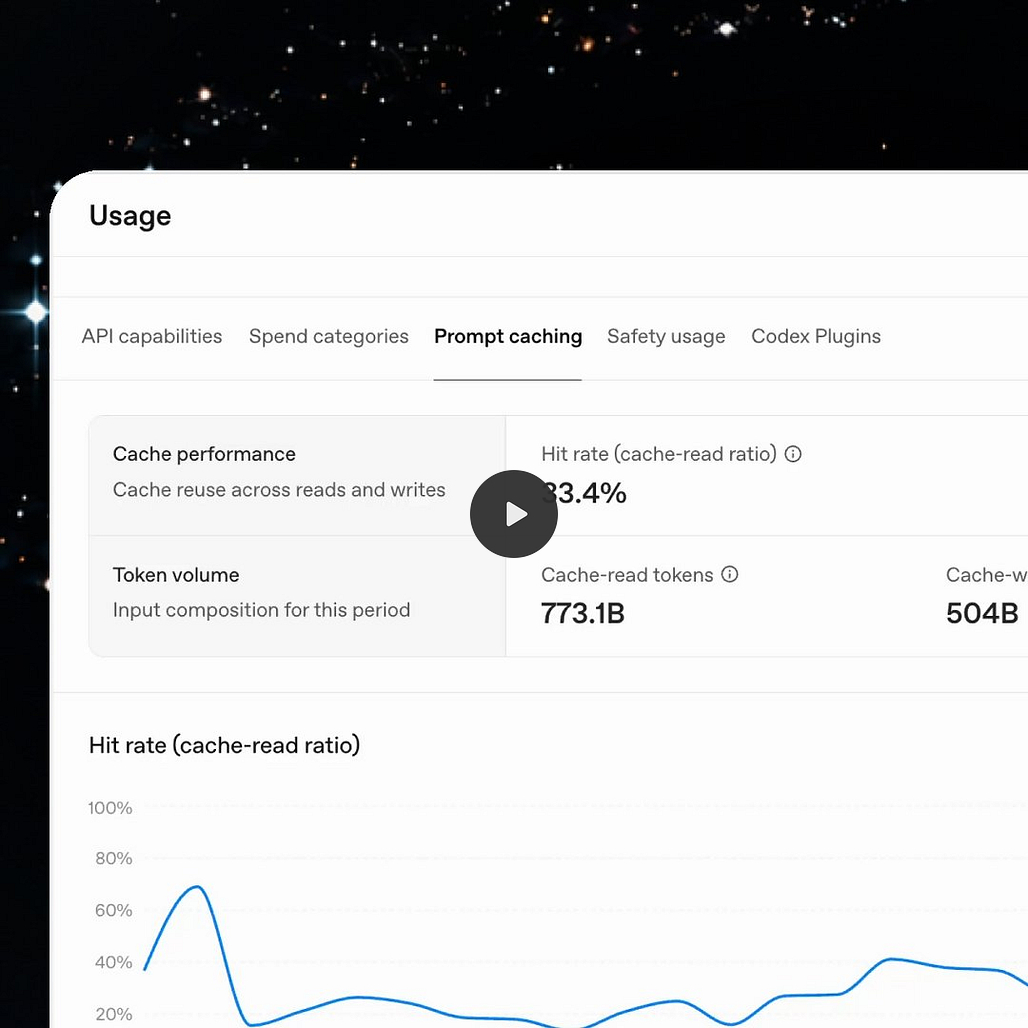
Still, long-lived agents on large repositories can drift into a token mix that looks nothing like a simple chat prompt. If you operate those agents, watch billed fresh input, cached input, and output separately. Do not project the bill by multiplying the advertised base rate by a rough total-token estimate.
That shortcut is good enough until it suddenly is not.
Subscription pricing is much harder to compare
API users can measure dollars per token. Subscription users deal with rolling limits, shared quotas, weekly caps, and workload-dependent consumption.
OpenAI’s Plus plan is $20 per month and includes Codex access. OpenAI currently estimates roughly 15 to 150 local GPT-6 Sol messages per five-hour period on Plus. Those are estimates, not fixed message limits, and context size, reasoning effort, tool use, and caching can change how quickly the allowance disappears. Weekly limits can also apply.
Claude Pro is $20 per month when billed monthly and includes Claude Code and Opus access. Anthropic says paid plans use rolling five-hour limits plus weekly limits, with Claude activity across products drawing from the same pool. It does not give a fixed Opus message count because consumption depends on the model, conversation complexity, and features used.
Anthropic also increased five-hour usage limits for Pro, Max, Team, and seat-based Enterprise plans with the Opus 5.5 launch.
Launch-week community reports make the quota comparison even messier. In one r/codex thread, a long-time Codex subscriber said they were shifting more work back toward Claude and praised Opus 5.5’s rate limits. In r/ClaudeCode, users described returning to Claude while also worrying that the launch experience and usage limits might change.
Those are individual reports, not quota measurements. Repository size, reasoning level, cache behavior, agent actions, and plan tier can make two developers on the same service report very different experiences.
If quota is the reason you are considering a switch, test each tool on your normal workload and record when you actually hit the limit. A fixed message estimate is less useful than your own accepted tasks per subscription cycle.
Neither model gives you local control
GPT-6 Sol and Claude Opus 5.5 are closed, hosted models. The underlying weights are not available for local inference.
For OpenAI API customers, API inputs and outputs are not used for training by default, while abuse-monitoring data is generally retained for up to 30 days and qualifying customers can use Zero Data Retention.
Anthropic’s commercial policy is similar in the area that matters here. Chats and coding sessions from its commercial offerings are not used to train models unless the customer chooses to participate in its Development Partner Program. Consumer Claude and consumer Claude Code plans use separate data controls.
Personal ChatGPT and Codex accounts also have different controls from the API. OpenAI says users can turn off “Improve the model for everyone,” which also applies to Codex tasks on personal ChatGPT plans.
For proprietary or client-sensitive repositories, check the exact product, plan, retention setting, and account type before assuming an API policy also describes a consumer subscription.
If the code cannot leave hardware you control, neither model solves that requirement.
A local coding agent gives up frontier-model capability in exchange for a different control model. Popular AI has a guide to running local coding agents with GGUF Loader Agentic Mode and a broader RTX 3090 local LLM guide for developers who want that fallback.
More on local AI


Which coding model should you actually use?
▪ Start with GPT-6 Sol for routine and high-volume coding. It fits ordinary implementation work, repetitive edits, test generation, straightforward debugging, coding automation, and agent pipelines where most runs already pass acceptance. The lower base price gives you room to make more calls, and the reasoning controls let you avoid paying for deep thought when the task is mechanical.
▪ Start with Claude Opus 5.5 when failure itself is expensive. Repo-wide refactors, difficult migrations, ambiguous bugs, architectural changes, unfamiliar large codebases, and long autonomous tasks are the strongest candidates. The early direct evidence says the Claude Code plus Opus 5.5 combination is completing the tested coding work more reliably and faster, at materially higher API cost per attempt.
▪ For mixed workloads, using both models is more rational than declaring allegiance to one vendor.
▪ Route ordinary jobs to Sol. Escalate when Sol fails acceptance, when the task has already exposed difficult reasoning requirements, or when a wrong pass would cost more in review time than the inference-price difference.
▪ Starting with Opus can also make sense when you already know the job is hard. Saving $0.30 on inference is a poor trade if the cheaper attempt predictably creates fifteen minutes of debugging.
▪ There is one more exception. If your workload regularly crosses Sol’s 272K input threshold and reuses large cached contexts, recalculate from the long-context rates. Opus 5.5 can come surprisingly close on fresh input and can become cheaper on repeated cached input.
What to watch as the launch data matures
The models are still in their launch window. Repeated tests on the same repositories will tell us more than unrelated benchmark snapshots.
▪ Accepted-task rate is the first number to track. A model that looks cheaper per call can become expensive if it regularly needs a second or third pass.
▪ Human correction time is the second. Coding models are increasingly good at producing patches that look plausible before they are actually safe to merge. Review minutes belong in the cost model.
▪ Actual billed token mix is the third. Repository agents may spend far more of their budget on cached context, tool-driven turns, and long-context requests than a simple fresh-input pricing comparison suggests.
▪ Quota behavior deserves its own log for subscription users. Anthropic changed limits around the Opus 5.5 release, while OpenAI’s usage can vary widely with reasoning effort and context. Launch-week generosity or scarcity can move quickly.
The useful comparison is not one leaderboard score. It is accepted tasks, human correction time, and actual billed cost on the work you do.
GPT-6 Sol vs Claude Opus 5.5: use Sol by default, escalate when failure gets expensive
▪ GPT-6 Sol should be the default coding model for most cost-conscious developers today. Below its long-context threshold, its token pricing is hard to beat. The early tests suggest that the trade is some coding reliability and completion speed, not a collapse in capability.
▪ Claude Opus 5.5 is the stronger candidate for jobs where one good run can be worth more than several cheap attempts. Its early coding results are strong enough to justify testing on difficult, long-horizon work where retries and developer review cost more than the model premium.
Do not pay more just because Opus sits higher on an early leaderboard. Pay more when it saves enough failed work to justify the difference.
And do not assume Sol always costs half as much. Once a coding agent crosses 272K input tokens, the pricing spreadsheet gets considerably less flattering.
The practical setup is simple: use Sol as the default lane, measure failures instead of vibes, and move the expensive jobs to Opus when the cheaper path stops being cheap.
Explore more from Popular AI:
Start here | Local AI | Builds & gear | Autonomy & policy | Fixes & guides | Popular AI podcast
If you had to pick one for your coding workflow today, would you choose GPT-6 Sol or Claude Opus 5.5, and what would decide it for you: coding quality, agent reliability, or cost?